How We Teach.
Your step-by-step path for learning drums, piano, guitar, bass, or singing – backed by four educational pillars for faster results.
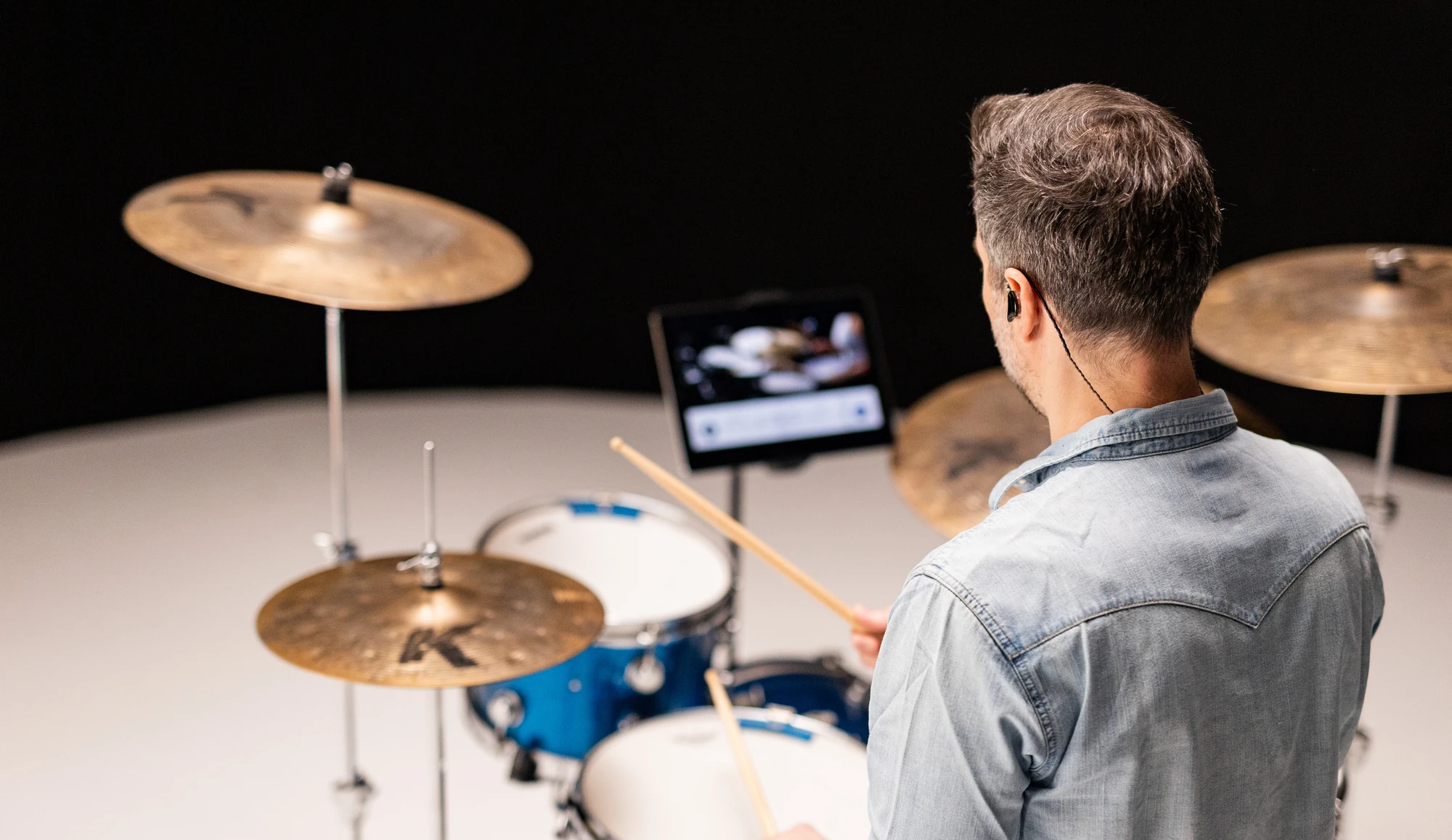
Play To Learn
No theory. No homework. Real music from your very first lesson.
Spaced Practice
Short daily sessions that outperform hours of weekend-only practice.
Interleaving
Mix three skills per session so your brain is forced to keep learning.
Visible Progress
Track your streak, path, and growth so you never lose momentum.
Based on learning science and 20+ years of teaching music. View The Research
No Homework.
Just Play.
Other lessons end with homework. Musora's lesson is the practice — press play, and a teacher walks you through every rep on screen.
- 1Show up for your weekly lesson
- 2Get a list of things to practice
- 3Go home. Practice alone, all week
- 4Drill the same exercise. Lose interest. Skip a day
- 4Show up unprepared. Or quit

- 1Open the app
- 2Today's 12-15 min session is queued
- 3Press play — the video runs the whole session
- 4Every rep, every cue, led by a teacher on screen
- 4When the video ends — that was your practice
“If you come in and we say, here’s your daily 15-minute session, then you know you’re going to get your 15 minutes of practice as you watch the videos. You don’t have any homework.”
— Aaron Graham · Musora Head of Education
Show up. Press play. That's the session.
Short & Daily Beats
Long & Rare.
Your brain consolidates motor skills during rest — not during practice. Twelve minutes every day is neurologically superior to two hours on Sunday. The science is unambiguous.
Retention after one week of weekend-only practice
Blocked sessions
Retention after one week of 12-minute daily sessions
Spaced sessions
“The Method is designed to help you build better habits. Consistent, bite-sized practice sessions will consistently outperform random, sporadic, marathon-style sessions.”
— Jared Falk · Musora Co-Founder
12–15 minutes a day beats 2 hours on Sunday. Every time.
Variety Is
The Engine.
Blocked practice — drilling one thing until it's perfect — feels productive but trains your brain to stop adapting. Interleaving forces constant retrieval, which is where real learning happens.
Rhythm Foundation
Open with a groove you already know. Lock in your timing before adding anything new to the session.
New Technique
Tackle one technique at the edge of your ability. That feeling of struggle is the signal your brain is actually learning.
Applied Playing
Finish by applying both skills in a real musical phrase. This is where everything you practiced actually connects.
“When somebody sits down, they’re gonna get three very different things — different lessons, maybe different instructors, different music behind them.”
— Lisa Witt · Pianote Lead Instructor
One session. Three skills. Your brain stays on.
Evidence Is
The Fuel.
Most people quit not because music is hard, but because they can't see themselves improving. Musora makes your progress impossible to ignore.
“There is no greater motivation in life than seeing undeniable evidence of progress. When a student takes their first few lessons and sees that what they’re doing is working — that if all they do is continue to show up — they will achieve their dream of playing their instrument. And that’s the point of momentum.”
— Rick Kettner · Musora Co-Founder
Show up. See it work. Keep going.
The Full Method
This Is How We Teach.
Four principles that work together. Skip one and the system breaks. Use all four and progress becomes inevitable.
No Homework.
Real music from lesson one. Skills follow naturally when the music is meaningful to you from the start.
Short & Daily.
12 minutes every day beats 2 hours on Sunday. Your brain needs rest between sessions to lock in what you learned.
Three Skills Per Session.
Mixing skills forces constant retrieval — the exact condition your brain needs for durable, long-term retention.
Momentum You Can See.
Streaks, progress charts, and a clear learning path give you the evidence that you're actually getting better.
/marketing/musora/membership/homepage/2026/order-bg.webp)
Your First Week Free
Your First
Week Free
Learn to play any instrument with Musora, the music lessons app.
Free for 7 days then $30/month
/marketing/musora/membership/homepage/2025/app-store.svg)
/marketing/musora/membership/homepage/2025/google-play.svg)