

Every drummer makes mistakes when they’re starting out. I know I did, and honestly, I still catch myself slipping back into old habits sometimes. That’s normal. But some mistakes cost you more than others. They get baked into your technique early, and the longer they stick around, the harder they are to undo.
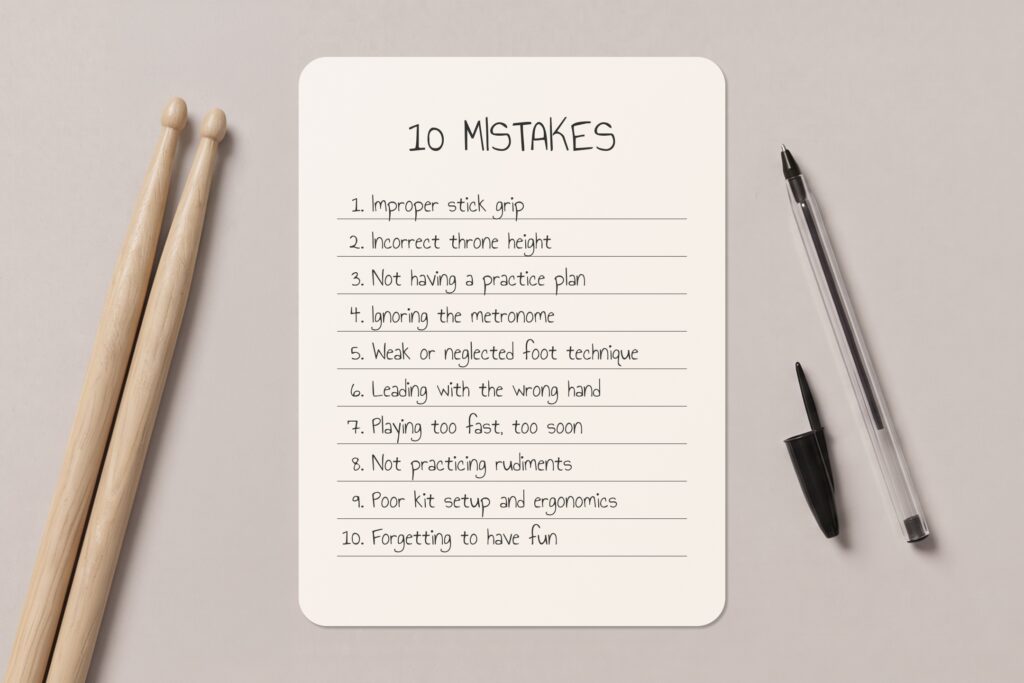
But once you know what to look for, most of these are simple fixes. Here are the 10 I see most often, and what to do about each one.
Improper Stick Grip
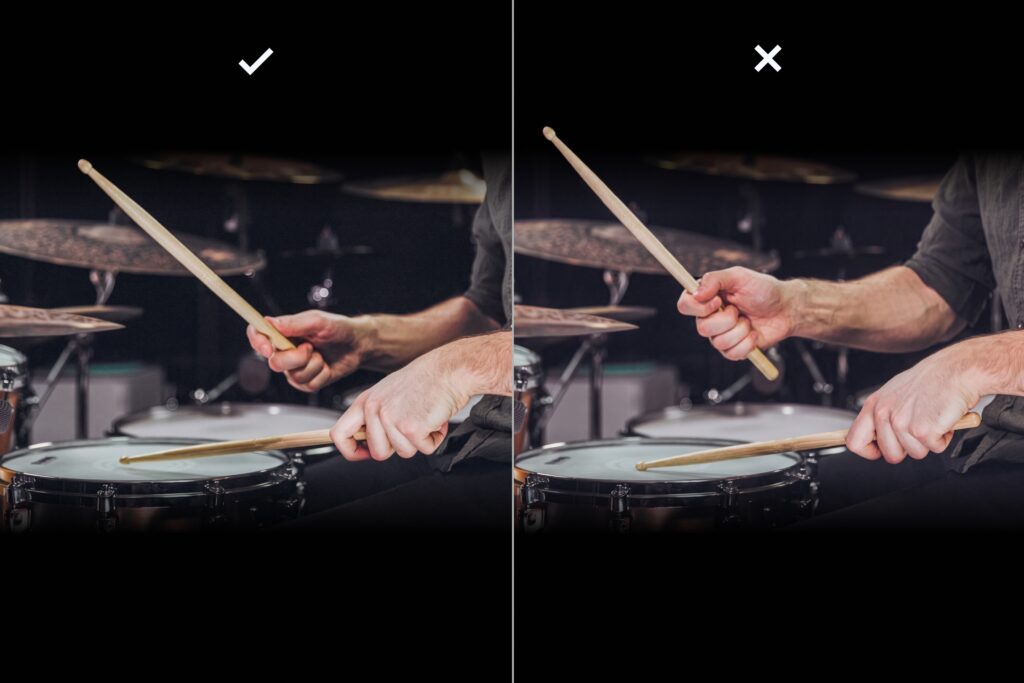
Gripping the sticks too tightly is probably the single most common thing I see. It feels like control, but it actually kills your rebound, slows you down, and tires your hands out fast.
Whether you’re playing matched or traditional grip, the fix is the same: let the stick move. Your hand should guide the natural fulcrum point, not choke it.
Incorrect Throne Height
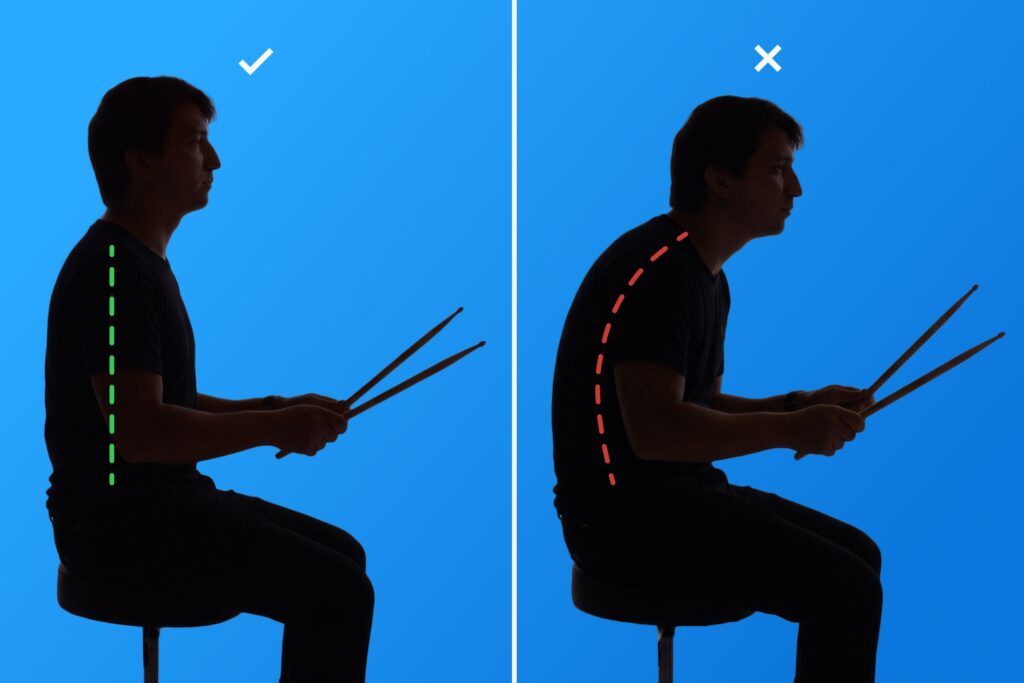
Your throne height affects everything – your posture, your reach, how relaxed your arms and legs can be. Too low and you’re hunched over reaching for everything. Too high and you lose stability on the pedals. Get this dialed in first, before you worry about anything else on this list.
I see this tie into tension a lot too – the harder a drummer’s concentrating, the more their shoulders creep up, and their grip tightens, and a bad throne setup makes that worse. Dial in your height and posture, and a lot of that tension takes care of itself.
Not Having a Practice Plan
This one’s subtle, but I’d argue it’s one of the most common mistakes out there.
A drummer sits down, plays through whatever’s fun or familiar that day, and calls it practice. Nothing wrong with that once in a while – but without a plan, you’re not really building anything new, you’re just reinforcing what you already know.
The fix is simple: know what you’re working on before you sit down, not after. That’s the whole idea behind our Method – a clear, structured path that tells you exactly what to practice and why.
If you’ve never tried it, our free 7-day trial is a great way to feel the difference a real plan makes.
Ignoring the Metronome
Look, I get it, the click can feel restrictive when you’re starting out.
But internal timing isn’t something you’re born with; it’s something you build, and the metronome is how you build it. Skip this step, and you’ll hit a ceiling fast. Every drummer I know who plays with great time puts in this work early.
Weak or Neglected Foot Technique
Hands get all the attention, but your feet are doing just as much work.
Bass drum control and hi-hat technique are foundational – not something to pick up later once your hands feel good. Spend real time here, even if it feels less exciting than working on fills.
Leading With the Wrong Hand (or Being Inconsistent About It)
A lot of beginners don’t think about which hand is leading – they just play whatever feels natural in the moment. Left, right, doesn’t matter which one you pick, but pick one and be consistent while you’re building your foundation. Inconsistent leading creates habits that are genuinely tough to unlearn later.
Playing Too Fast, Too Soon
I know – slow practice isn’t fun.
But if you can’t play something clean at a slow tempo, speeding it up just means you’re playing it sloppily, faster. Control at slow speeds is what makes speed possible later. Every drummer who looks effortless at high tempos earned it at low tempos first.
Not Practicing Rudiments
Rudiments have a reputation for being boring – I know, I used to think so too.
But they’re not busy work, they’re the actual foundation everything else is built on. Every fill, every groove, every bit of hand control you admire in a great drummer traces back to the vocabulary that rudiments build early on.
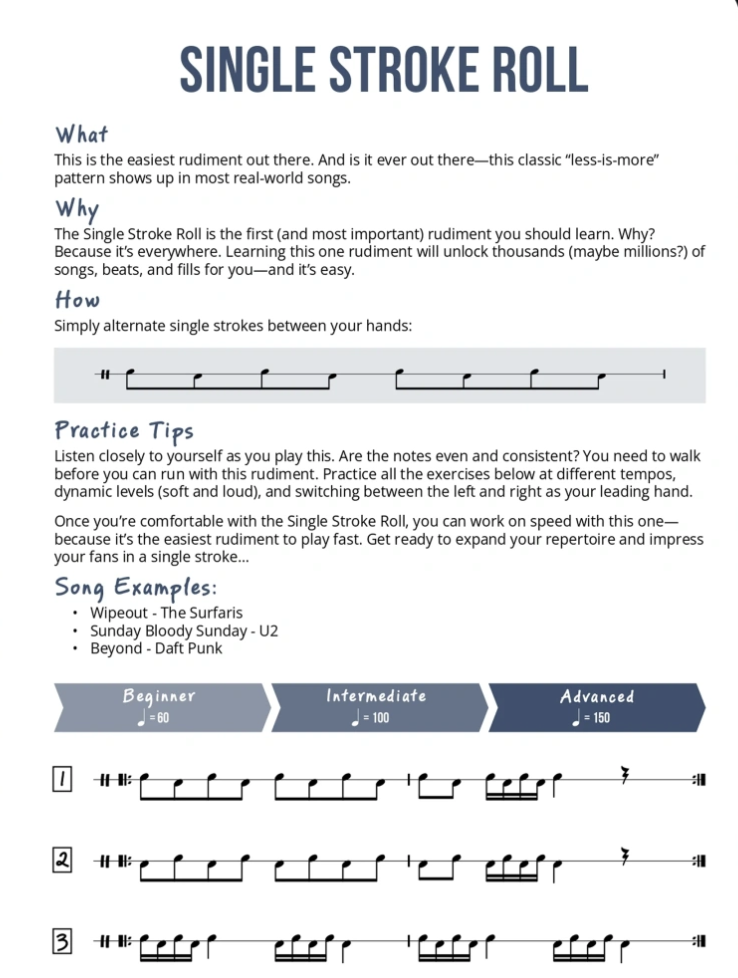
If you want to go deeper, check out our complete guide to all 40 drum rudiments.
Poor Kit Setup and Ergonomics
If your cymbals or toms are positioned awkwardly, you’re compensating for that with every single hit – reaching too far, twisting your body, throwing off your technique without even realizing it’s the setup’s fault. Take the time to get your kit dialed in around your body, not someone else’s.
Forgetting to Have Fun
Put in the work – but always leave room to just play.
I still remember why I fell in love with drumming in the first place, and it wasn’t from grinding out rudiments on a pad. It was the days I sat down behind the kit with no plan – cranked a song I loved and just played along, messed around with a groove until it felt good, hit stuff just to hear what it sounded like. None of the techniques in this article means anything if you lose that feeling.
Fix these one at a time – don’t try to overhaul everything at once. Pick whichever one feels most familiar to you right now, work on it deliberately for a week or two, and move to the next. That’s how real technique gets built: not all at once, but one honest fix at a time.
Want to Go Even Deeper?
If you recognized yourself in a few of these, you’re not alone. It’s why structured lessons make such a difference.
Inside Drumeo on Musora, our step-by-step Method is built to catch habits like these early, with real instructors guiding your technique from lesson one. Click here to try it free for 7 days and see for yourself.
You’ll get access to structured, step-by-step lessons and direct feedback from world-class instructors – so instead of guessing whether you’re fixing the right things, you’ll know exactly what to work on and why.