

Let’s be honest – every guitarist has been there. Fingers aching, chords buzzing, wondering if your hands are just “not built for this.” Spoiler: they are.
You’re probably just running into one (or five) of these classic beginner mistakes, and the second you fix them, everything gets easier.
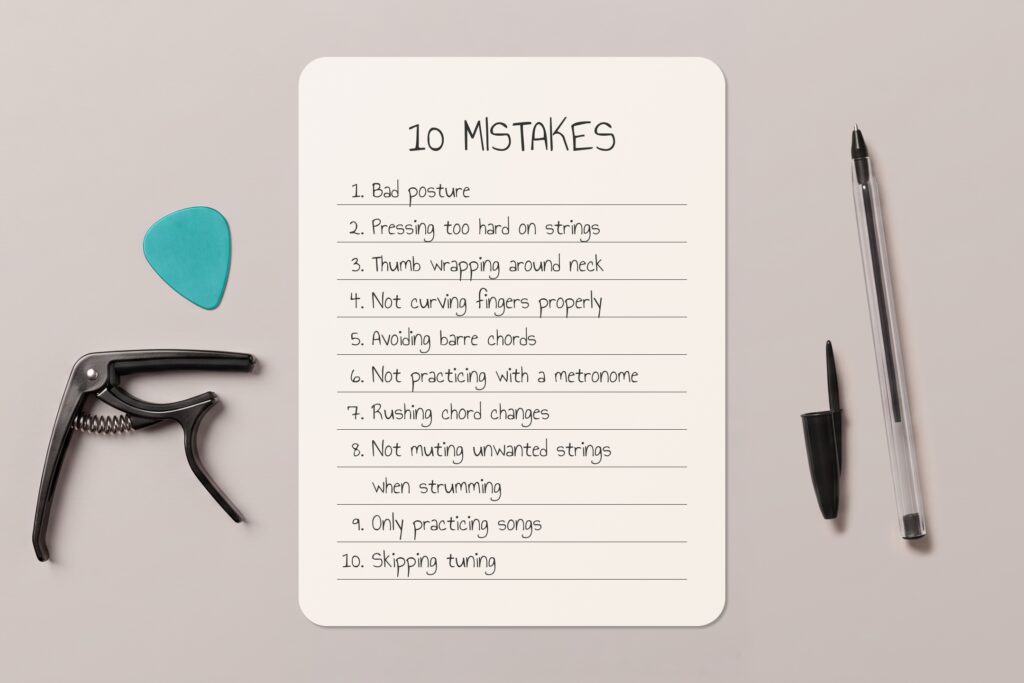
We’ve seen these ten come up again and again, so let’s go through them one by one.
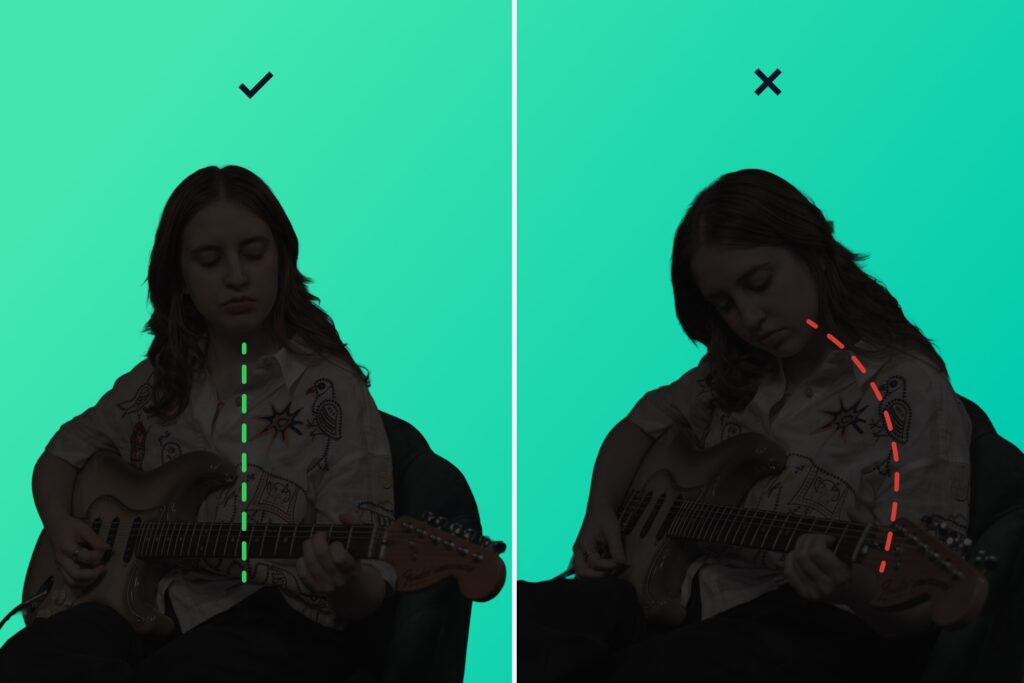
Bad Posture and Poor Guitar Positioning
This one’s sneaky because it doesn’t feel wrong until it does – usually after 20 minutes when your back’s aching and your fretting hand’s cramping up.
How you sit and hold the guitar affects your reach, your angle, literally your whole relationship with the instrument. Get comfortable, get the guitar close to your body, and everything downstream gets easier.
Pressing Way Too Hard on the Strings
New guitarists basically all do this – you think more pressure means a cleaner sound, so you white-knuckle every chord. It actually works against you: your hand fatigues fast, your fingers get sore, and you’re fighting the guitar instead of playing it. You need way less pressure than you think. The fretboard isn’t the enemy.
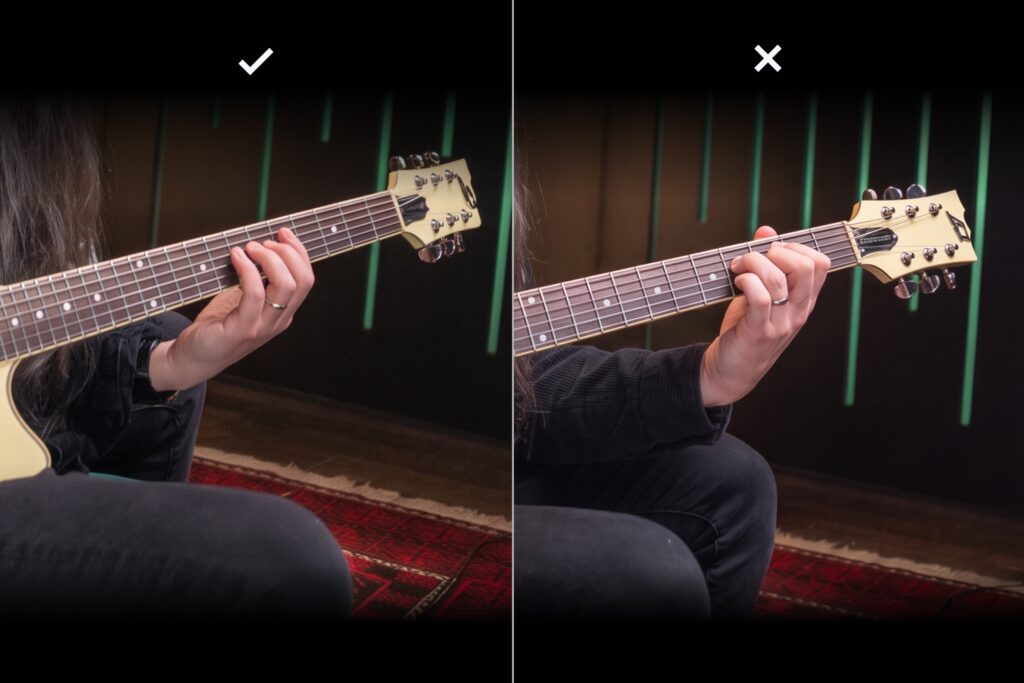
Wrapping Your Thumb Too Far Over the Neck
A little thumb-over-the-neck action is normal, even useful sometimes.
But if it’s creeping too far, it locks up your whole hand and kills your reach for anything that needs your fingers spread out. Keep your thumb roughly centered behind the neck, and your fingers get so much more room to actually do their job.
Not Curving Your Fingers
Flat fingers are the #1 cause of “why is this chord buzzing and muted when I’m pressing down fine?”
If your fingers lie flat, they brush against the strings next to them without you even noticing. Curving your fingers gives each one its own lane – cleaner chords, instantly.
Avoiding Barre Chords Because They're Hard
We’re not going to pretend barre chords aren’t tough at first – they genuinely are. But avoiding them just delays the inevitable, and they unlock so much of the fretboard once you’ve got them. The trick isn’t brute strength, it’s positioning: get your finger flat, right up against the fret, and let your hand’s natural leverage do the work instead of squeezing harder.

If you want a fast track past the frustration, our 30 Days to Better Barre Chords course walks you through exactly that – and it’s free with a 7-day trial to Musora.
Skipping the Metronome
We know – it feels like homework.
But timing is the one thing that instantly makes you sound like a “real” guitarist, even if your chords aren’t perfect yet. Playing without a metronome lets sloppy timing hide. Playing with one exposes it immediately, which is exactly why it’s so useful – even if it’s a little humbling at first.
Rushing Chord Changes
We get it, slow practice feels like you’re not making progress.
But if you rush chord changes before your hands actually know the shapes, you’re just practicing being sloppy, faster. Slow it way down, nail the transition cleanly, then speed up gradually. It feels backward, but it’s the fast track, ironically.
Forgetting to Mute Unwanted Strings
This is the one nobody tells beginners about, and it’s a game-changer once you catch it.
When you’re strumming a chord, some strings shouldn’t ring out – and if you’re not lightly muting them with a spare finger, you get that messy, out-of-tune-sounding strum even when every note is technically correct. Clean strumming is as much about what you mute as what you play.
Only Practicing Songs, Never Isolating Technique
Songs are fun, we get why you want to spend all your time there.
But if you only ever play songs, you’re never isolating the actual skills – clean scales, smooth chord transitions – that make songs easier in the first place. A few minutes of pure technique practice pays off across every song you learn after.
Skipping Tuning Before You Practice
This one feels optional, especially if your guitar “sounds close enough.”
But practicing on an out-of-tune guitar trains your ear on the wrong reference points, and it makes chords that should sound great instead sound slightly off in ways you can’t quite place. Ten seconds with a tuner before every session – it’s genuinely that easy, and it changes everything you play after.
You don’t need to fix all ten overnight. Pick whichever one’s been bugging you the most, work on it for a week or two, and move to the next. That’s honestly how every guitarist gets good – not all at once, just one fixed habit at a time.
Want to Go Even Deeper?
If you recognized yourself in a few of these, you’re not alone – and it’s exactly why structured lessons make such a difference. Inside Gutiareo on Musora, our step-by-step Method is built to catch habits like these early, with real instructors guiding your technique from lesson one. Click here to try it free for 7 days and see for yourself.
You’ll get access to structured, step-by-step lessons and direct feedback from world-class instructors – so instead of guessing whether you’re fixing the right things, you’ll know exactly what to work on and why.