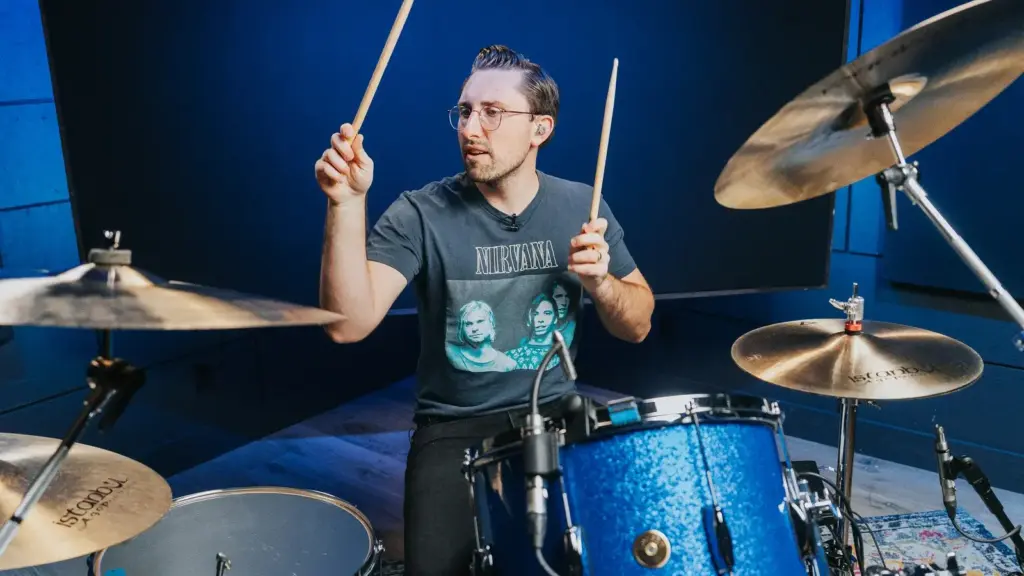
Drum rudiments sound boring — like eating your vegetables. But here’s the truth: rudiments are the reason some drummers sound fluid and musical while others sound stiff and mechanical. Every fill, every ghost note, every fast passage on the kit is built from rudiments. They’re the alphabet of drumming.
There are 40 official rudiments recognized by the Percussive Arts Society, but you don’t need all 40. Start with 5–10 essential rudiments and you’ll transform your playing. This guide covers the essential rudiments every beginner needs, organized from easiest to most challenging, with practice tips from Jared Falk and the Drumeo community on Musora.
What Are Drum Rudiments (And Why Should You Care)?
Rudiments are sticking patterns — the fundamental building blocks of everything you play on drums. They’re combinations of rhythms that provide recognizable patterns you can insert when, where, and how you want to create the sound, style, and musical vibe you want.
Think of rudiments like letters. Musicians practice scales the way other musicians practice letters. When you have a good grasp on the most commonly used rudiments, you’re ready to go wherever you want on your journey at the drum kit. You’ll be more comfortable in all your drumming pursuits — which means you’ll have more fun.
Rudiments build:
- Hand speed — faster, cleaner note delivery
- Stick control — precision and dynamics
- Coordination between hands — independence and fluidity
- Dynamic range — soft, medium, and loud in control
- Musicality — the ability to hear and play what you want
How To Practice Rudiments (Before We Dive In)
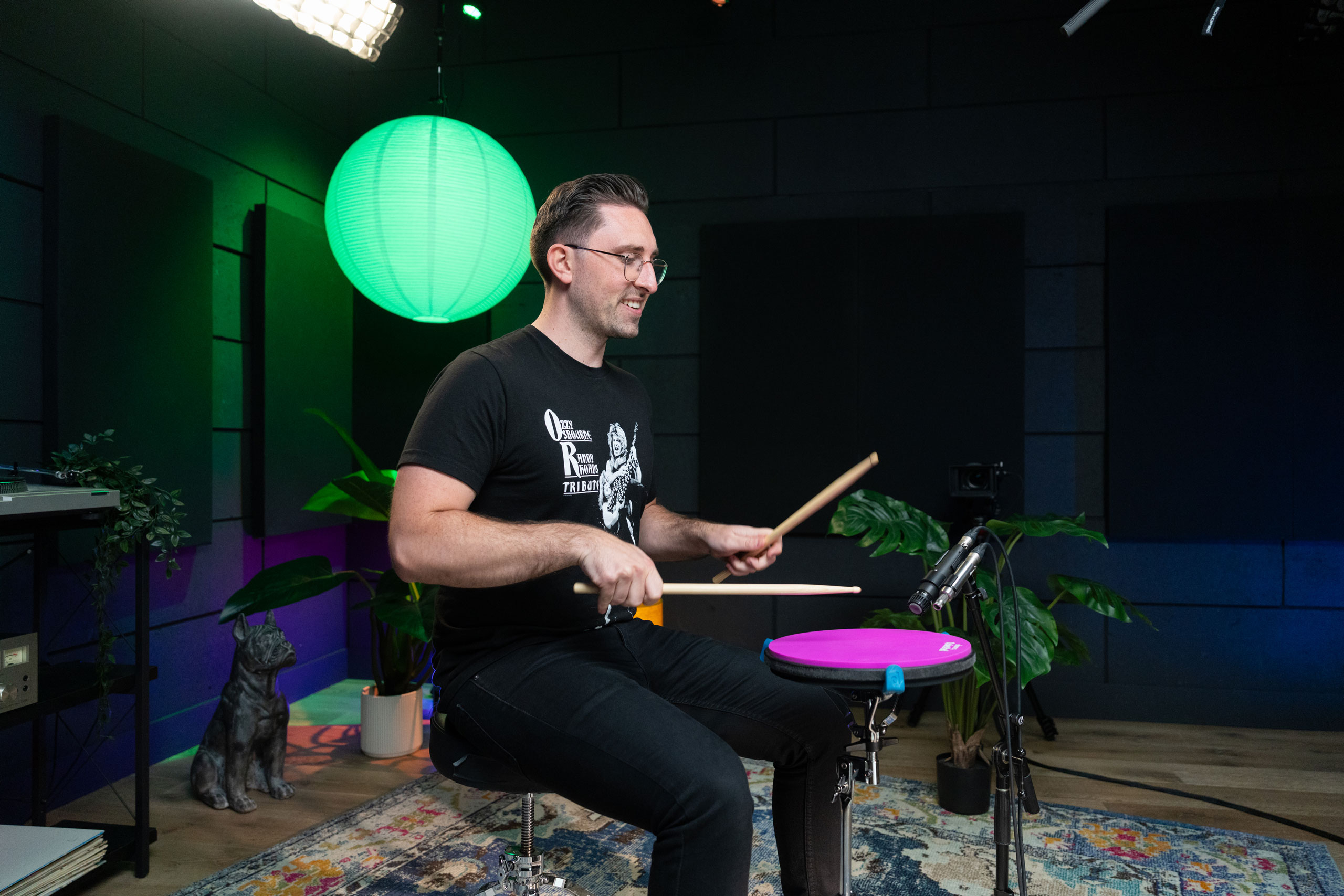
You don’t need a full drum kit to start. In fact, a practice pad is ideal. Here are the fundamentals that will speed up your progress:
- Start on a practice pad. You don’t need a full kit — a single practice pad teaches you grip and hand coordination.
- Use a metronome. Start at 60 BPM and increase only when the sticking is clean. Speed comes from consistency, not rushing.
- Focus on evenness between hands. Your weak hand will lag — that’s normal. Practice slowly until both hands feel balanced.
- Practice in short bursts. Five minutes of focused rudiment work beats thirty minutes of sloppy playing.
- Cross-link to How To Learn Drums for setup advice. Make sure your posture and grip are solid from day one.
Tier 1: The Foundation (Start Here)
Single Stroke Roll (R L R L)
The Single Stroke Roll is the easiest rudiment out there. And is it ever out there? This classic pattern shows up in most real-world songs. The Single Stroke Roll is the first (and most important) rudiment you should learn. Why? Because it’s everywhere. Learning this one rudiment will unlock thousands of songs, beats, and fills for you — and it’s easy.
What it is: Simply alternate single strokes between your hands: Right, Left, Right, Left. That’s it. Listen closely to yourself as you play. Are the notes even and consistent? You need to walk before you can run with this rudiment. Practice all the exercises below at different tempos, dynamic levels (soft and loud), and switching between the left and right as your leading hand.
Where you’ll use it: Fills, fast passages, and the foundation of almost every beat on the kit. Single strokes become fills around toms. Single strokes become hi-hat/snare groove patterns. Once you master this, you can work on speed with this one — because it’s the easiest rudiment to play fast. Get ready to expand your repertoire and impress your fans in a single stroke.
Start at 60 BPM, work up to 120 BPM minimum. The faster and cleaner, the better.
Double Stroke Roll (R R L L)
The Double Stroke Roll is two bounces per hand — more complex than the single, but essential for any real drumming. This is where grip and fulcrum really matter. Let the stick do the work. The bounce technique — letting the stick rebound naturally instead of forcing it — is the key to fast, clean double strokes.
Why it’s harder than it sounds: Your weak hand will probably bounce unevenly. That’s normal. The fulcrum (balance point on the stick) is critical here. If it’s too far from the butt end, you’ll lose control. Too close and you’ll lose rebound.
Where you’ll use it: Buzz rolls, fill transitions, and any time you need a fast, sustained passage. For more on this, check our Drum Guide for grip technique.
Tier 2: Building Control
Single Paradiddle (R L R R, L R L L)
The paradiddle is the rudiment that changes everything. It introduces the concept of accents and natural hand switching. The pattern is: Right Left Right Right, Left Right Left Left — with accents on the first note of each group.
Explain the sticking pattern, why the accent matters, and how it shows up in funk and rock grooves. This rudiment teaches your hands to work together in a new way — and once it clicks, you’ll see it everywhere.
Double Paradiddle (R L R L R R, L R L R L L)
Extension of the single paradiddle with longer phrase length. Great for 6/8 time and jazz applications. This is where paradiddles start sounding truly musical.
Tier 3: Adding Dynamics
Flam
Two hands hitting almost simultaneously — one grace note followed by a primary stroke. Creates a fatter, wider sound. Used in marching, orchestral, and rock drumming for emphasis and texture.
Drag (Ruff)
Two grace notes before the primary stroke. Creates a rolling, decorative effect. Common in fills and snare patterns, adds character and dimension to your playing.
Tier 4: Intermediate Patterns
Flam Accent
Combines flams with accent patterns in triplet groupings. This is where rudiments start sounding musical — less like exercise, more like the real thing.
Single Stroke Four
Four alternating strokes used in fast fill patterns. A speed-building exercise that bridges foundational rudiments to more complex patterns.
Tier 5: Putting It On The Kit
Here’s the big shift: moving from the practice pad to the actual drum kit. Rudiments aren’t meant to stay on the pad. They’re meant to be your building blocks for real music.
Single strokes become fills around toms. Play your sticking pattern but move between drums as you go: snare, high tom, mid tom, floor tom, back to snare. Instant fill.
Paradiddles become hi-hat/snare groove patterns. The natural hand switching in a paradiddle maps perfectly to switching between closed hi-hats (right hand) and snare (left hand). Now you’re playing real grooves, not exercises.
Flams add accents to backbeats. A flamed snare hit sounds bigger, more powerful. Use flams sparingly to add emphasis where it matters — the kick and snare of your groove.
Your 30-Day Rudiment Practice Plan
Here’s a simple progression that works:
The best part? Once you’ve spent time with these rudiments, they become muscle memory. You stop thinking about the sticking and start thinking about the music. That’s when drumming becomes fun.
Where to Go From Here
You have the sticking patterns. Now go play.
- Continue with advanced rudiments. Once you’ve nailed the five tiers above, there are dozens more in Drumeo’s curriculum on Musora. But master these first.
- Apply what you know to songs. Rudiments aren’t ends in themselves — they’re means to playing music you love. Check out 5 Easy Drum Songs For Beginners (coming soon) and start working these patterns into real grooves.
- Work on common mistakes. Many beginners plateau because of grip issues, posture problems, or practice habits that hold them back. Read 10 Common Mistakes Beginner Drummers Make (coming soon) and make sure you’re not falling into those traps.