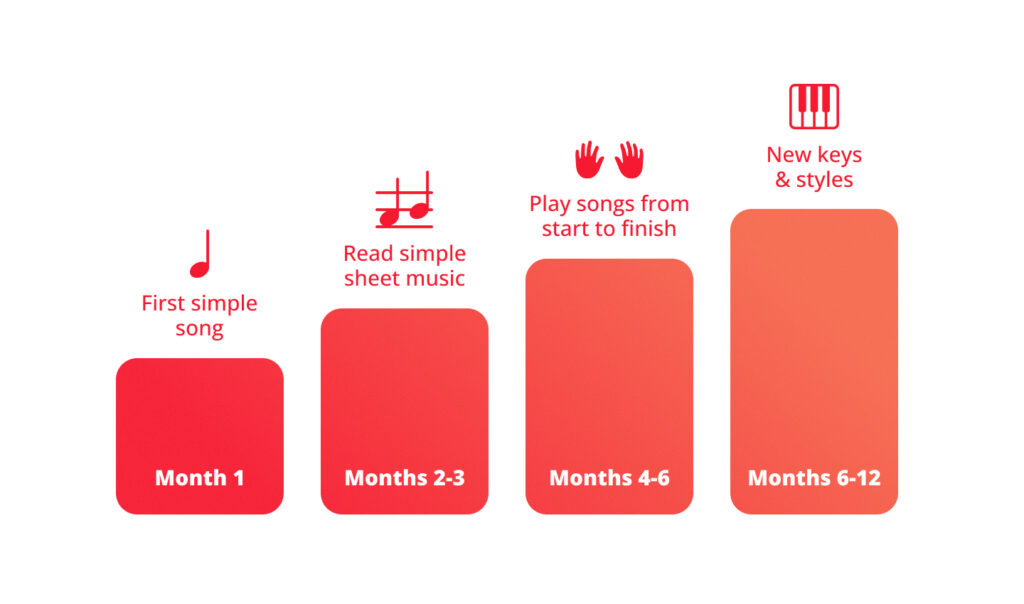
Short answer: With about 10–15 minutes of daily practice and a structured curriculum, most beginners play a simple song by the end of month one, play both hands together by month three, and can play songs they actually recognize and enjoy by month six.
By the one-year mark, most students are exploring different keys and styles and making real musical choices – dynamics, phrasing, expression – instead of just following instructions.
Here’s what that actually looks like, month by month. And if your progress doesn’t match this exactly – that’s okay.
Every hand, every schedule, every life is a little different. This is a guide, not a race.
What Affects Your Timeline
Results vary, but the single biggest factor is consistency – not talent, not age, not the keyboard you own.
Someone practicing 10 focused minutes a day will consistently outpace someone practicing two hours once a week. Prior musical experience helps, but it’s a small factor next to how often you sit down and practice with a clear plan.
If you’re worried you’re not “musical enough” for this, you are. That worry is normal, and it goes away with practice, not with talent you either have or don’t.
Month 1
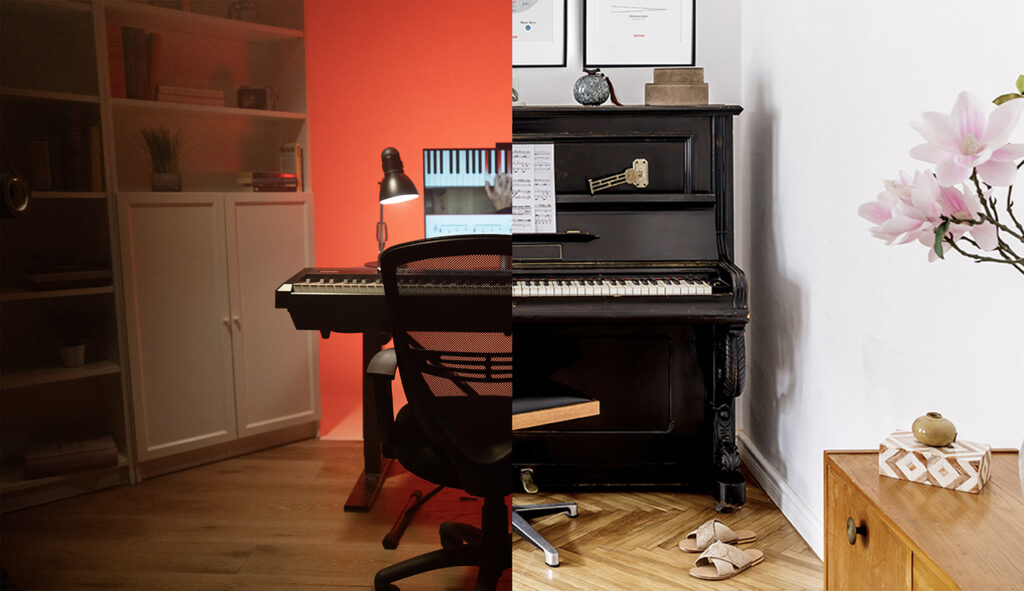
If you haven’t already, this is also when you’ll want to settle on what you’re practicing on – a digital keyboard works just as well as an acoustic piano for a beginner, and it’s usually the easier place to start.
Next, just get comfortable with the keys. Learn the note names using the black-key landmarks, play the C major scale with each hand separately, and learn your first chord progression.
By the end of the month, you’ll be able to play a simple song.
To learn more, see: How To Learn Piano: The Complete Beginner’s Guide (2026)
Months 2 to 3
Start playing both hands together.
Learn a few more chords – minor chords, basic 7ths. Begin reading simple sheet music. This is where the early Pianote Method levels live.
Months 4 to 6
Play recognizable songs from start to finish.
Your hands start to feel more independent, and you’ll start hearing chord progressions in the music you already listen to. This is usually when people start saying, “I’m actually playing piano.”
Months 6 to 12
Tackle more complex songs, learn new keys beyond C, and explore different styles – pop, classical, blues. Sight-reading improves.
You start making musical choices instead of just executing instructions.
How You'll Know You're Actually Progressing
One of the hardest parts of learning piano alone is knowing whether you’re actually improving, or just repeating the same session on a loop. This is where a lot of self-taught players get discouraged — not because they aren’t progressing, but because they have no way to see it.
That discouragement is real, and it’s not a sign you’re bad at this. It’s a sign you need better feedback, not more talent.
A structured learning path like the Pianote Method solves this with a real progress tracker – mark each lesson complete as you finish it, and pick up exactly where you left off next session.
It’s a small thing, but it turns “am I getting better?” into a real answer instead of a guess, which is often the difference between sticking with piano past month two and quietly giving up.
What This Timeline Assumes
This breakdown assumes roughly 10–15 minutes of daily practice with a structured curriculum, not random, unguided practice.
How Structured Learning Speeds This Up
The biggest timeline-killer isn’t lack of talent – it’s lack of a plan.
Without a clear next step, you either freeze or practice the wrong things. A structured method, like the Pianote Method, removes that guesswork by building each skill in the right order.
Concretely, that structure also includes weekly live Q&A sessions where real teachers answer questions in real time, plus the option to submit a video of your own playing for direct feedback. That feedback loop is what closes the gap between “practicing for months” and “actually improving” – it’s genuinely one of the fastest ways to compress a timeline like the one above.
Read the full guide: How To Learn Piano: The Complete Beginner’s Guide (2026)
Where to Go From Here
Here’s How to Take the Next Step
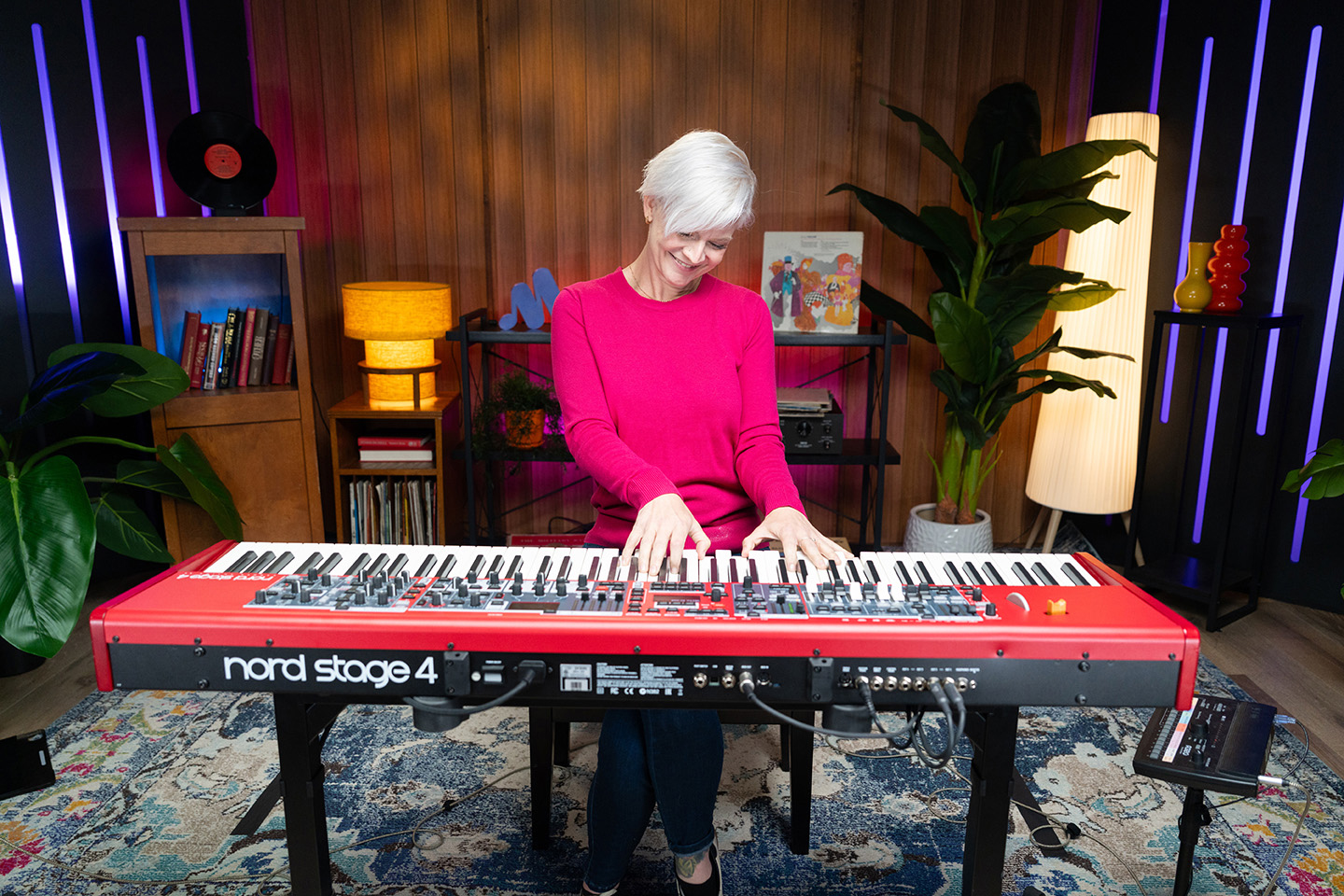
Start free: Pianote’s Getting Started On The Piano course is free – 4 lessons with me, Lisa Witt, taking you from your very first note to your first chord progression.
Go deeper: The Pianote Method gives you a structured, level-by-level path with video lessons, theory, and ear training from real, world-class instructors.
You’ll also get access to a 500+ song library to play through, with slowdown and loop tools that let you isolate any tricky section until it clicks. It’s how 100,000+ students learn.
Click here to start your free 7-day trial.
Keep learning here: This guide is part of a series. Explore our guides on piano chords, music theory for beginners, reading sheet music, and easy songs to build your skills.
Learning piano is one of the most rewarding things you can do. It doesn’t require natural talent. It doesn’t require starting young. It requires 10 minutes a day, a willingness to sound bad for a little while, and a clear path forward. And somewhere in there – don’t forget to have fun with it!