

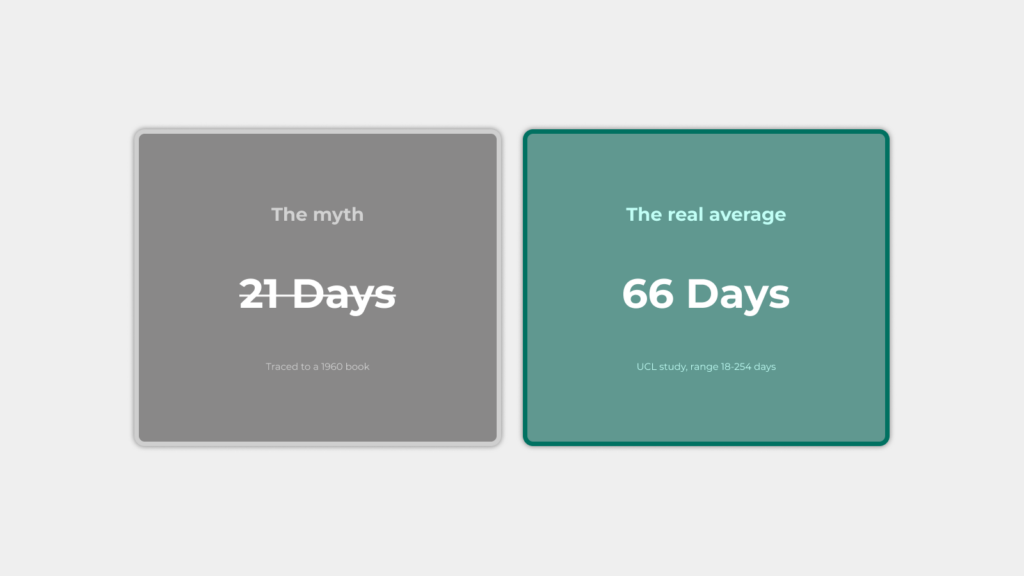
Here’s a stat that gets repeated so often it’s basically internet gospel: it takes 21 days to build a habit.
It’s also… not true.
That number traces back to a 1960 book called Psycho-Cybernetics by Dr. Maxwell Maltz, a plastic surgeon who noticed his patients took about three weeks to psychologically adjust to a new face after surgery, not from any actual research on habits, let alone musical ones.
So how long does it actually take? And more usefully – what actually works? Let’s get into both.
The Real Number (And Why It's Good News)
In 2010, researchers at University College London tracked 96 people trying to build a new daily habit – everything from eating fruit at lunch to a 15-minute run each day. They measured how automatic the behavior felt each day, all the way until it plateaued.
The real average: 66 days. Not 21. And the range was huge – anywhere from 18 days to 254 days, depending on the person and the habit.
Here’s the part that actually matters for you: missing a single day didn’t meaningfully derail people’s progress. The habit curve is barely noticeable. What mattered was showing up consistently over time, not perfectly. If you skip a day of practice this week, you haven’t broken anything – you’ve just had a normal week.
Why Some Habits Stick And Others Don't
The single biggest predictor of whether a new habit sticks isn’t willpower – it’s whether you’ve attached it to a specific, consistent cue. Psychologist Peter Gollwitzer’s research on “implementation intentions” – simple if-then plans like “After I pour my morning coffee, I’ll practice for 15 minutes” – found that people who make plans this specific are two to three times more likely to actually follow through, compared to people who just set a vague goal like “practice more.”
This is the actual mechanism behind advice you’ve probably heard as “habit stacking”: attach the new behavior to something you already reliably do, and the existing habit becomes the trigger for the new one. You stop relying on remembering or feeling motivated – the cue does the work.
For a practice habit, that might look like:
- After I get home from work, I’ll pick up my instrument for 10 minutes before I do anything else.
- After I brush my teeth in the morning, I’ll run through one scale or exercise.
- After dinner, I’ll sit down for one song before checking my phone.
The specific time doesn’t matter nearly as much as the consistency of the cue.
What Actually Works, From Teaching Hundreds Of Thousands Of Musicians
Science tells you why habits form. For what actually works day to day, here’s what we’ve learned from years of teaching musicians across every instrument at Musora – the patterns that show up again and again in the students who actually stick with it:
Write down a plan before you sit down. Even if the plan is “just an experiment today,” decide that on purpose instead of drifting into your practice session. Intentionality beats winging it.
Set specific, ranked goals. Vague goals like “get better” don’t give you anything to act on. Rank your goals by difficulty and match them to the time you actually have – a 10-minute session needs a different plan than an hour.
Track your progress. You don’t need anything fancy – a notebook or a phone note works. The point is having a record, so “am I improving?” has a real answer instead of a guess.
Balance technique with musicality. It’s tempting to drill the same technical exercise because it’s quantifiable and satisfying. But technique in isolation doesn’t make you a better musician – playing music does. Split your time between the two on purpose.
Tell someone what you’re working on. Public commitment is a genuinely underrated motivator. Tell a friend, a bandmate, anyone – and let them check in on you.
Do something every day, even if it’s small. This is the one that matters most of all. Ten minutes of real practice beats zero minutes of waiting for the “right” conditions. There’s no such thing as the stars aligning for practice – you just start.
Putting It Together: A Simple Practice Habit Stack
Combining the research with the practical advice above, here’s a simple way to actually build this:
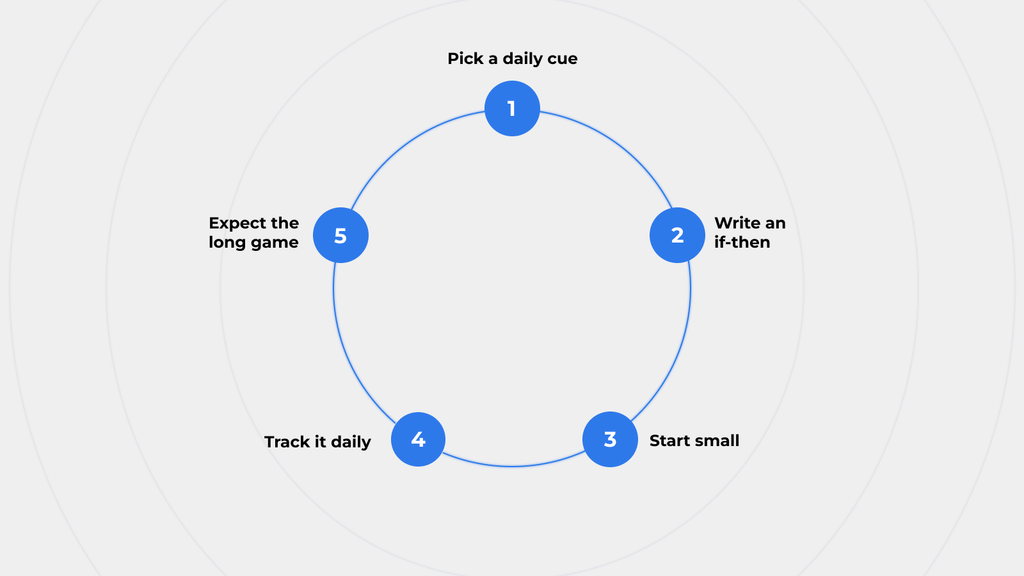
- Pick one existing daily habit to attach practice to (making coffee, getting home from work, brushing your teeth).
- Write down one specific if-then plan: “After [existing habit], I will [practice] for [amount of time].”
- Keep the first version small. Ten minutes is a real practice session. You can always extend it once the habit is established — but an oversized goal is the fastest way to quit in week one.
- Track it daily, even with something as simple as a checkmark on a calendar.
- Expect it to take a while, and don’t panic over one missed day. You’re statistically looking at somewhere around two months before this feels automatic — that’s normal, not a sign you’re failing.
Start Building The Habit Today
All of this works better with a system that’s actually built around it. On Musora, every practice session, lesson, and song gets logged automatically with a real progress tracker and daily/weekly streaks – so instead of guessing whether you’re being consistent, you can just look. It’s the best way to stay motivated.
Click here to start your free 7-day trial.
Whichever instrument you’re building a habit around – piano, guitar, drums, bass, or your voice – the same principles apply. Pick your cue, start small, and let the streak take care of the rest.