You want to learn bass. Maybe you’ve always been the one nodding along or pulling a stankface to the bassline nobody else notices. Maybe you picked up a guitar once and it just didn’t feel right – too many strings doing too many things at once.
Bass might be exactly the instrument for you. It’s not “guitar’s little brother” – it’s the instrument holding the whole band together, and it has its own identity worth learning properly.
This guide walks you through everything you need to go from a complete beginner to playing your first real basslines. No prior experience or music theory required to get started. Just you, a bass, and about 10–15 minutes a day.
We’ll cover gear basics, finger technique vs. pick, reading bass tab, groove fundamentals, and your first basslines. By the end, you’ll have a clear starting point – and a companion guide covering exactly what to expect month by month after that.
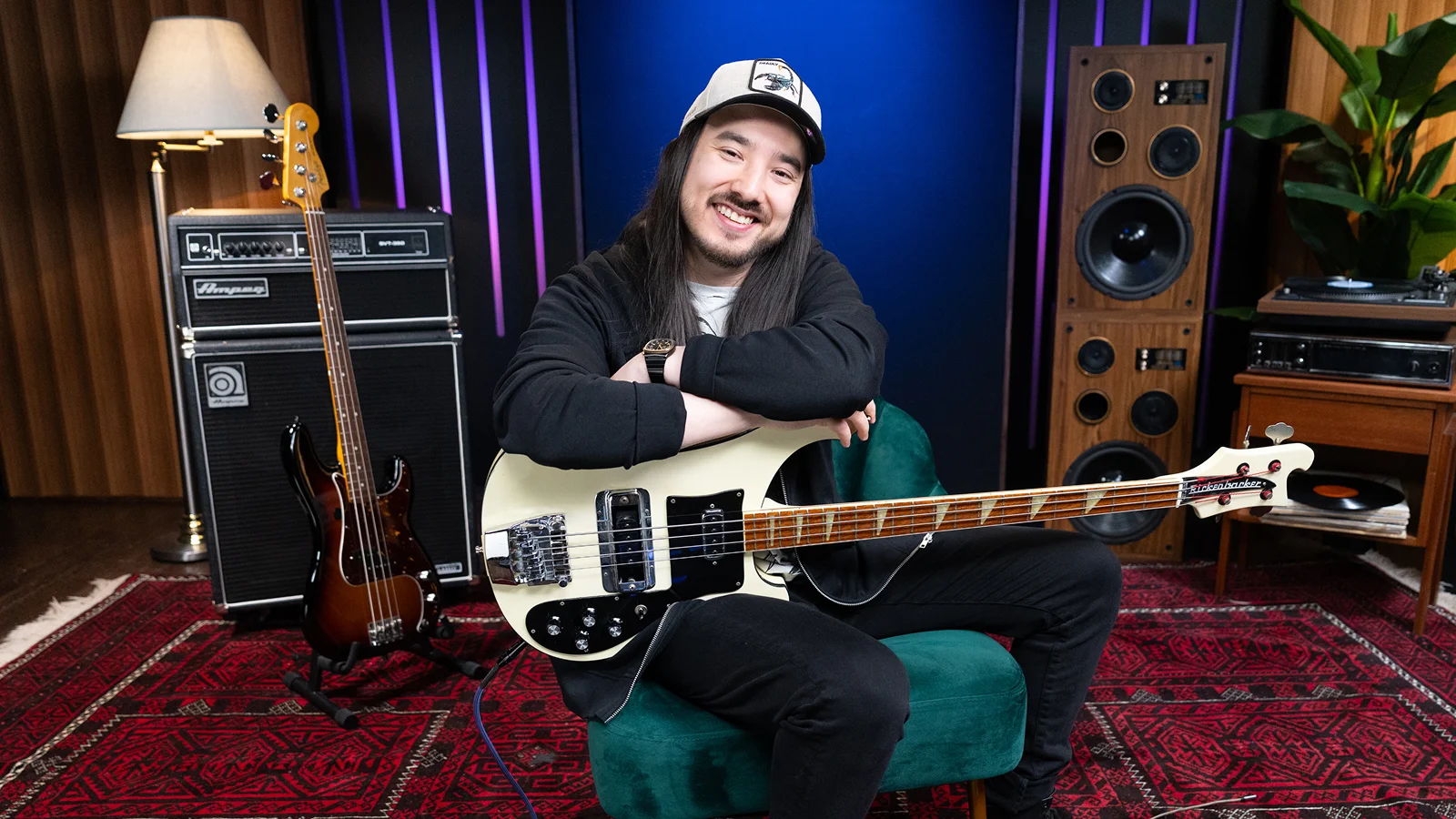
This guide is based on how we teach over 100,000 students at Musora, including our bass lessons with Chris Wong – PlayBass’s lead instructor. He’s helped thousands of beginners lock into their first real basslines through PlayBass on Musora, and I know he can do the same for you.
Gear Basics: What You Need To Start
What to look for:
- A properly set-up bass. Same rule as guitar – a cheap bass set up correctly beats an expensive one that hasn’t been. If buying new, ask about a setup, or have a local shop handle it.
- A tuner or tuner app. Bass strings are thick and low – tuning by ear as a beginner is genuinely harder than on guitar, so lean on a tuner early.
- An amp, eventually – but not immediately. You can build real technique unplugged. A small practice amp in the $80–$200 range is enough once you’re ready.
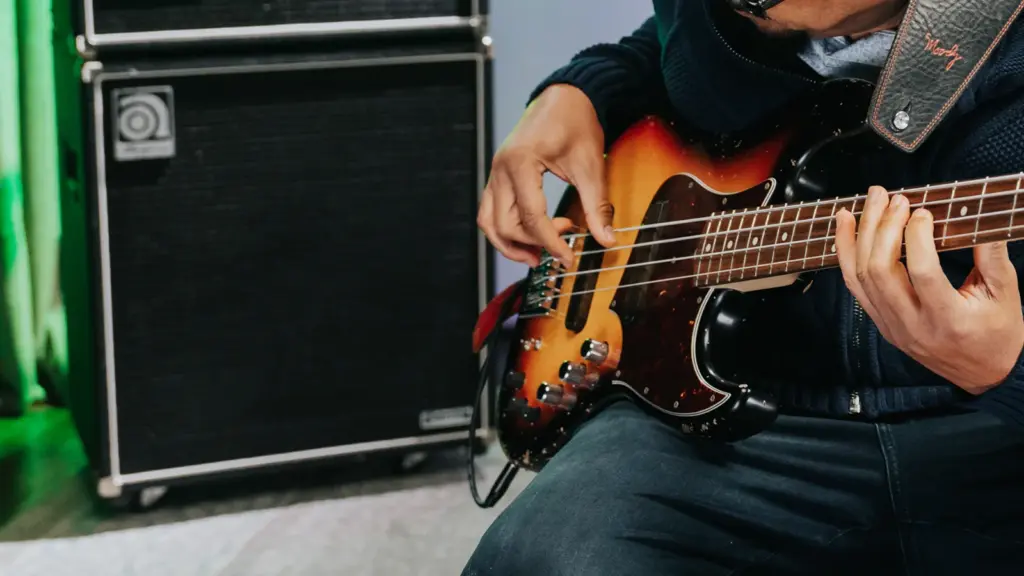
What you don’t need (yet): a 5-string bass, a pedal board, or a high-wattage amp. A standard 4-string bass in the $200–$500 range covers a beginner well for years.
Tip: Keep your bass on a stand where you’ll see it daily, same as any instrument – visibility drives practice.
Finger Technique vs. Pick: Which Should You Use?
This is a genuinely bass-specific decision that guitarists don’t have to make the same way.
- Fingerstyle (plucking with your index and middle fingers, alternating) is the most common approach for beginners – it gives you more control over tone and dynamics, and it’s how most groove-focused bass playing is taught.
- Pick style gives a brighter, more aggressive attack, common in punk, rock, and metal.
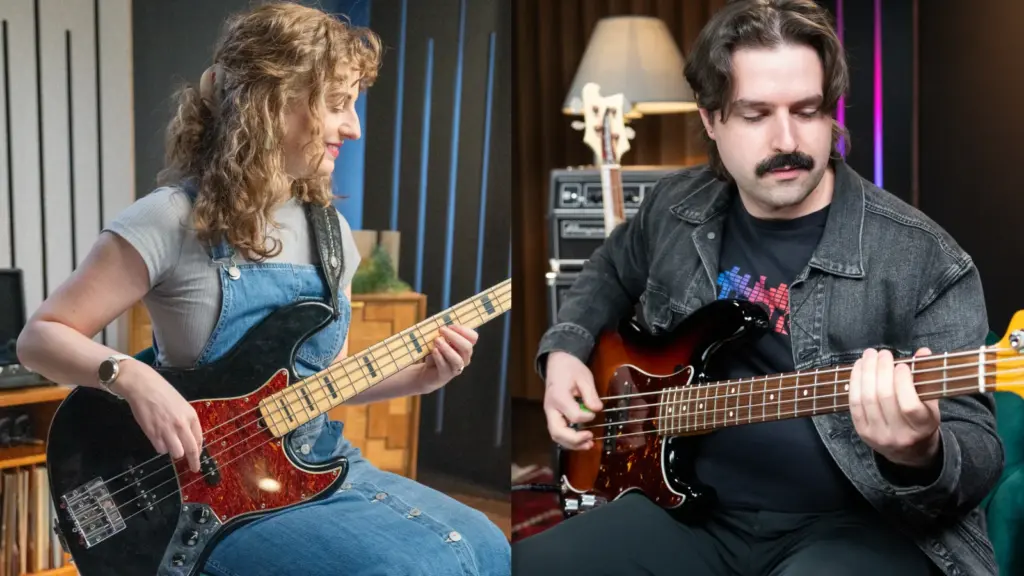
Neither is “more correct” – pick the approach that matches the music you actually want to play, though most beginner lessons start with fingerstyle since it builds foundational control.
Reading Bass Tab
Bass tablature (tab) shows you which string and fret to play without needing to read standard notation.
Tab uses four horizontal lines, one for each string on your bass. The bottom line is your thickest, lowest string (low E), and each line going up represents the next string up (A, D, G). Numbers placed on those lines tell you which fret to press – a “0” means play that string open, with no fret pressed at all. You read tab left to right, just like text, playing each number in order as you come to it.
A simple example: This plays the open low E string, then the 3rd fret on the same string, then the open A string:
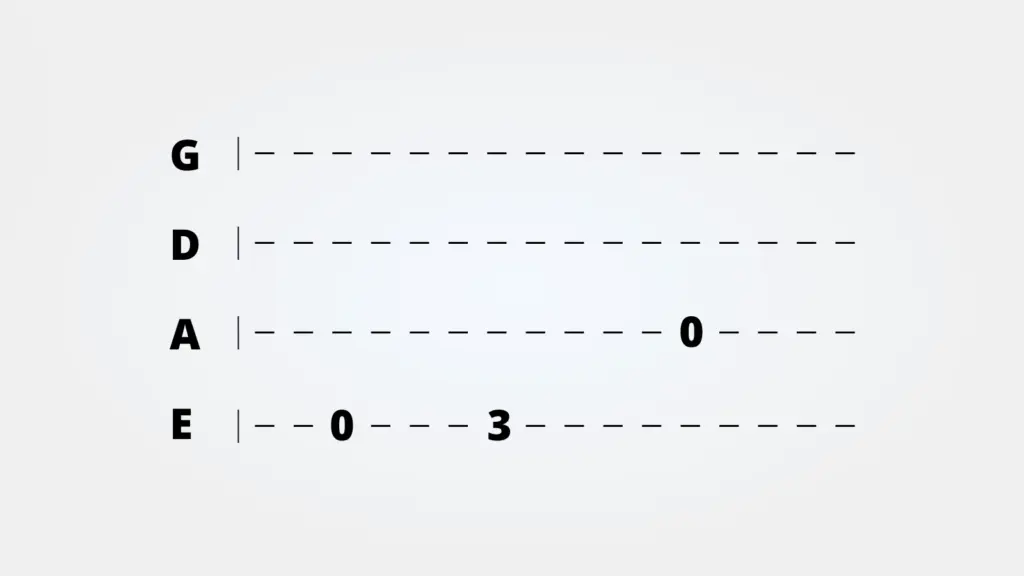
Once you get used to matching numbers to frets, tab becomes fast to read – genuinely faster than standard notation for most bass parts, since you’re not translating symbols into note names first.
Tab is a genuinely beginner-friendly entry point – you can start playing real basslines within your first sessions, without needing to learn the staff first.
Groove Fundamentals
Here’s the mindset shift that separates good bass players from technically-correct-but-boring ones: your job isn’t to play the most notes. It’s to make the song feel good.
Groove comes from timing and space as much as from the notes themselves – locking in with the kick drum, leaving room, and staying consistent. A simple, steady bassline played with rock-solid timing beats a flashy one played loosely, every time.
Try this:
- Pick a song you know well – anything with a clear, steady beat.
- Forget the actual bassline entirely.
- Just play the open low E string in time with the kick drum, every time it hits, for the whole song. Nothing else. It sounds almost too simple to matter, but it trains the exact skill that groove depends on: locking your timing to another instrument instead of just playing along to a general sense of the beat.
Once that feels natural, try it with a few different songs across genres – you’ll start noticing how differently the kick drum sits in a slow ballad versus an upbeat pop song, and how much of “feel” comes down to exactly where you place each note relative to it.
Your First Basslines
Start with root-note basslines – playing the root note of each chord in a song, in time with the beat. This is the foundation nearly every bassist starts with, and it’s genuinely functional, real bass playing, not just a warm-up exercise.
A simple example in E: For a common I–IV–V progression (E, A, B), play the root note of each chord for four steady beats before moving to the next:
- E (root): open low E string, held for 4 beats
- A (IV): 5th fret on the low E string, or the open A string, held for 4 beats
- B (V): 7th fret on the low E string, or 2nd fret on the A string, held for 4 beats
- Back to E to resolve
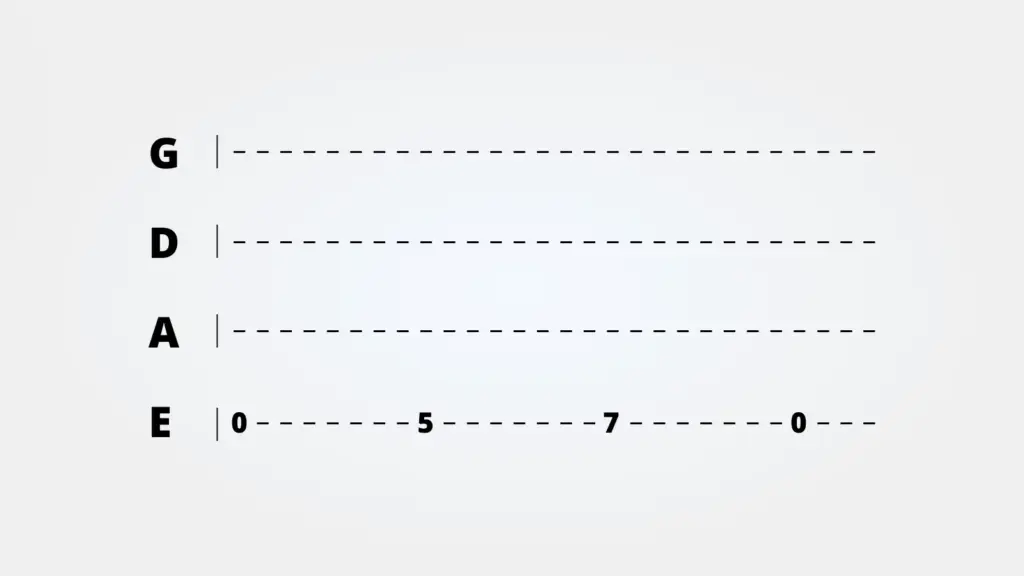
Play through this slowly with a metronome, keeping every note the same length and evenly spaced. Once it feels locked in, try holding each root note for just 2 beats instead of 4 – the progression stays the same, but the groove starts to feel more alive.
For song recommendations at this level, check out: 5 Easy Bass Songs For Beginners. (Coming soon)
What To Practice (And How Often)
Consistency beats intensity. 10-15 minutes a day, most days of the week, gets you further than one long weekend session.
A simple daily routine:
As you improve, extend to 20–30 minutes – but don’t sacrifice consistency for length.
Common Beginner Mistakes
After teaching thousands of new bassists, the same mistakes show up again and again. Avoid these, and you’ll progress faster than most:
- Playing too many notes. It’s tempting to fill every gap once you know a few more notes. But the groove almost always benefits more from restraint than from busyness – locking in with the beat matters more than note count.
- Neglecting timing practice with a metronome. Bass is fundamentally a timing instrument. Skipping metronome practice early means building loose timing habits that are much harder to fix once they’re ingrained.
- Treating bass like a guitar with two strings removed. Bass has its own technique, its own role in a band, and its own way of thinking about music. Approaching it as a stripped-down guitar means missing what actually makes bass playing good.
- Ignoring your fretting-hand muting. Unwanted string noise is one of the most common beginner tells. Learning to mute strings you’re not playing – with your fretting hand or picking hand – cleans up your sound immediately.
- Learning without structure. Bouncing between random YouTube videos is fun, but without a clear progression path, you build gaps – usually in timing and groove – that show up later as bad habits. A structured path like the PlayBass Method ensures you build each skill in the right order.
For the full list, read: Common Bass Mistakes Beginners Make (And How To Fix Them).
Ready To Start Playing?
You’ve got the foundation — gear, technique choice, tab reading, and your first basslines. Wondering what’s realistic to expect from here? We’ve laid it out month by month in a companion piece.
Read next: How Long Does It Take To Learn Bass Guitar? (Month-By-Month Timeline) (Coming soon)
Here’s How to Take the Next Step
Try PlayBass for free: PlayBass gives you a structured, step-by-step curriculum, real feedback from world-class instructors, and a supportive community of aspiring musicians in the same boat as you. Your first week is completely free, so you can try the full PlayBass experience before deciding if it’s right for you.
Keep learning here: This guide is part of a series. Explore our guides on easy bass songs and common mistakes to build your skills.
Learning bass is one of the most rewarding things you can do. It doesn’t require natural talent. It doesn’t require starting young. All it takes is 10–15 minutes a day, a willingness to sound rough for a little while, and a clear path forward.