
Most piano players think there are thousands of chords to memorize. There aren’t.
Almost every chord symbol you’ll ever see – from a plain C major to something like Cmaj7#11 – is built from the same small set of building blocks, stacked in a predictable order. Once you understand the formula, you stop memorizing shapes and start building chords yourself, in any key.
This guide walks through every major chord family, one formula at a time, with a keyboard diagram for each so you can see exactly which notes go where. It’s meant to be a reference – bookmark it, and come back any time you run into a chord symbol that stumps you.
And if you’re a visual learner, grab our free Digital Chords and Scales Book below – it lays out every formula and example from this guide in one handy PDF file.
🎹 Get Your Free Digital Chords and Scales Book
Grab the ultimate chords and scales cheat sheet and practice at home.
We’ll also send you free lessons and special offers. Don’t worry, we value your privacy and you can unsubscribe at any time.
Chord Basics
Before we get into specific chord types, a few terms worth knowing:
- Root: the note a chord is built on and named after. In Cmaj7, the root is C.
- Formula: chords are described using scale degree numbers – 1, 3, 5, 7, and so on – counted from the root. Learn the formula, and you can build the chord starting on any root.
- Triad: a three-note chord (root, 3rd, 5th). Almost every chord in this guide starts as a triad and gets built up from there.
- Inversion: when the notes of a chord are rearranged so the root isn’t on the bottom. We won’t cover inversions for every chord here, but you can read more about them in this lesson.
Triads
Triads are the foundation everything else in this guide builds on. They’re three-note chords made of a root, a 3rd, and a 5th – and just by changing one note at a time, you get four completely different sounds.
Major Chords
The brightest, most stable-sounding triad.
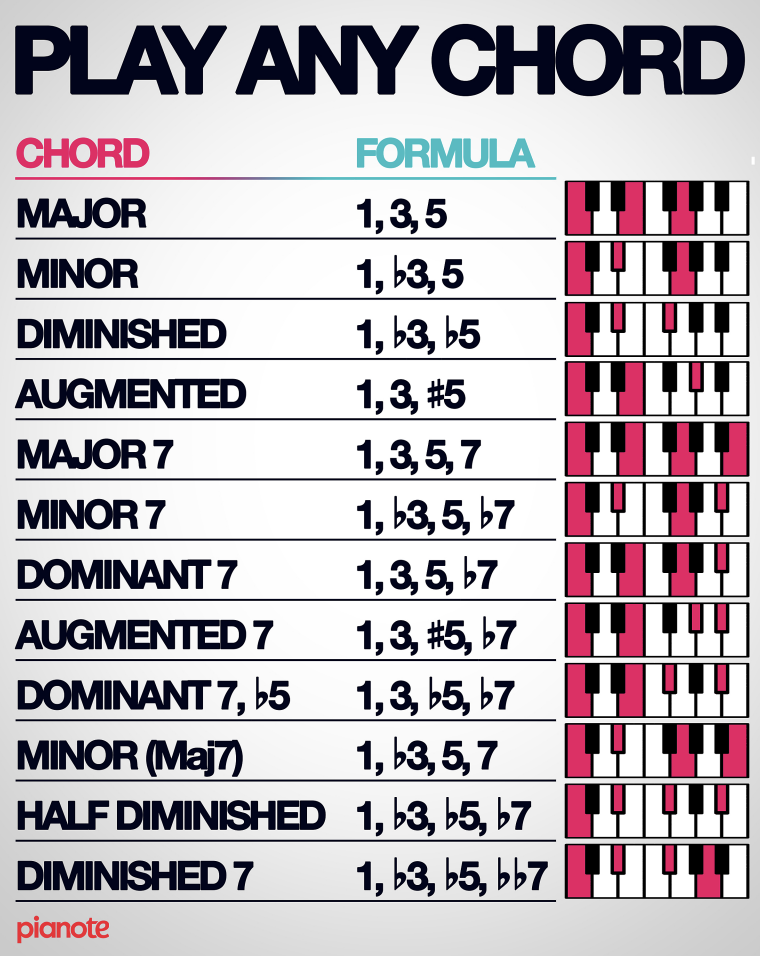
Formula: 1-3-5
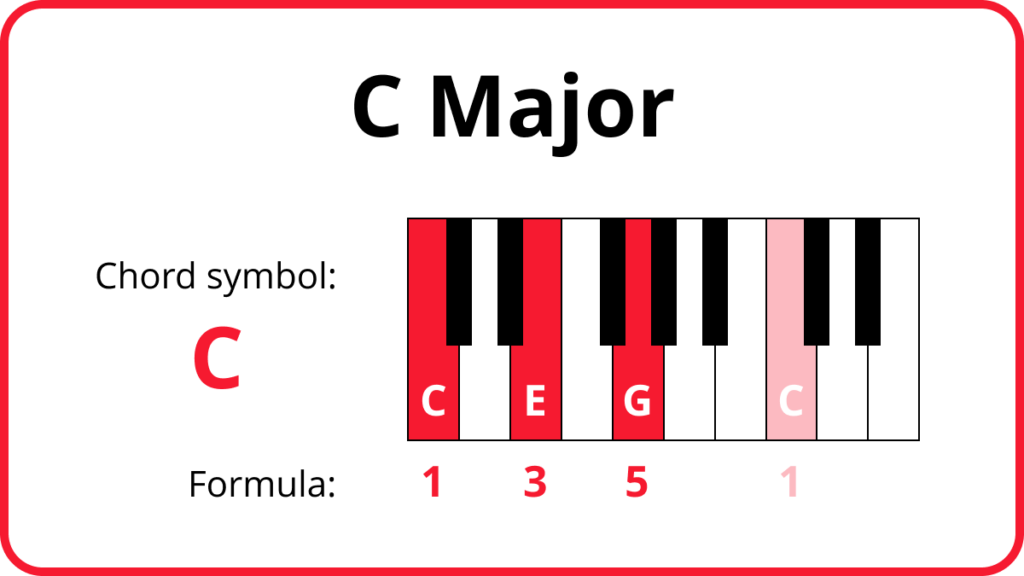
C-E-G. Bright, stable, “happy” – the sound most people picture when they think “chord.”
Minor Chords
Flatten the 3rd of a major chord, and you get minor.
Formula: 1-♭3-5.
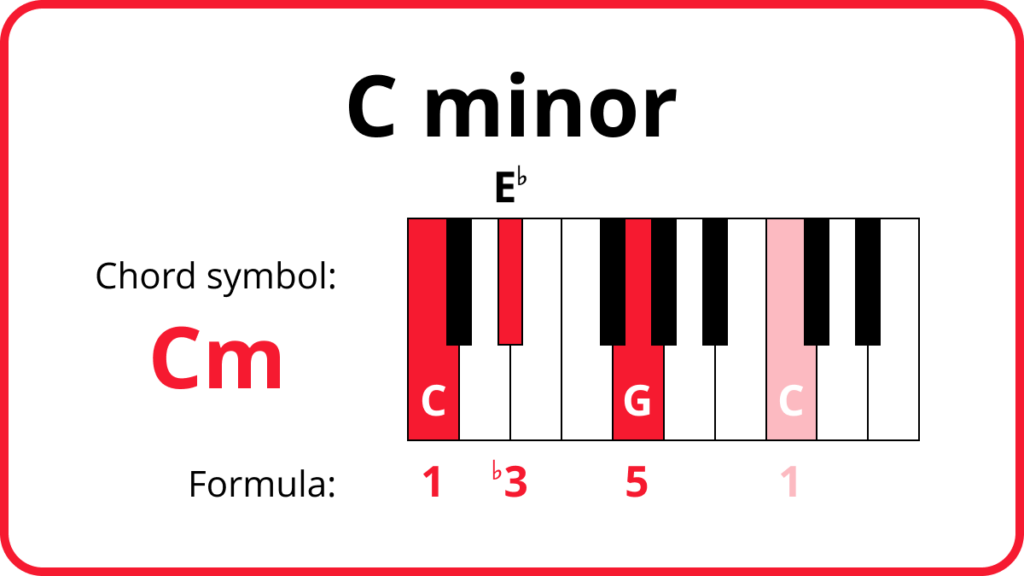
C-E♭-G. Darker, more emotional than major – same shape, one note moved.
Diminished Chords
Flatten the 3rd and the 5th, and the chord shrinks into something tense.
Formula: 1-♭3-♭5.
For example:
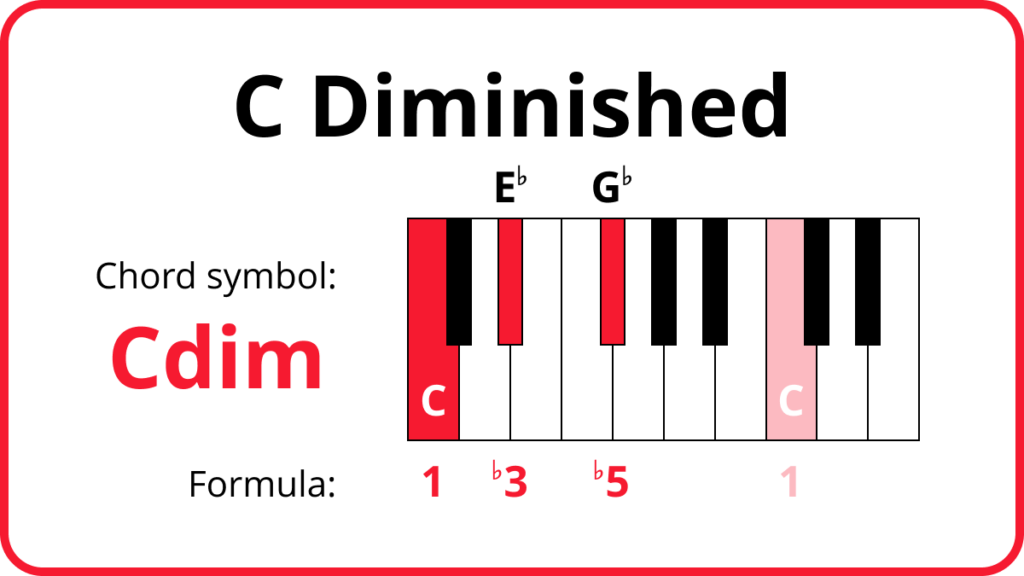
C-E♭-G♭. Tense and unstable on its own – but incredibly useful as a passing chord, which we’ll get into later in this guide.
Augmented Chords
Raise the 5th of a major chord instead, and you get something that sounds like it’s floating.
Formula: 1-3-#5.
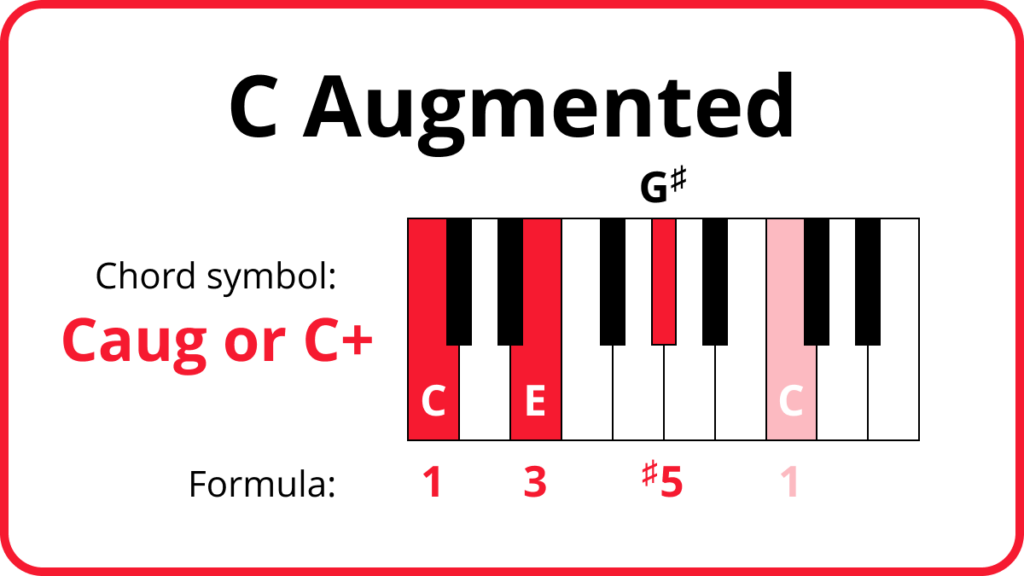
C-E-G#. Unstable in a good way — cinematic, unresolved, like it wants to move somewhere.
The big takeaway: one note can completely change how a chord feels. Before moving on to anything fancier, make sure you can hear the difference between major, minor, diminished, and augmented.
Power Chords
Power chords strip the 3rd out entirely, so the chord isn’t clearly major or minor – just strong and open.
Formula: 1-5.
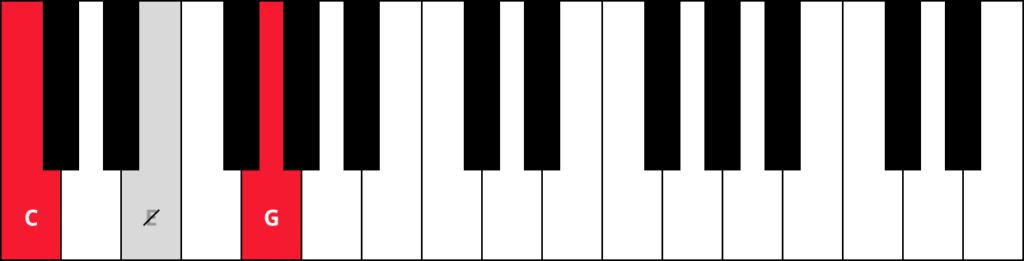
C-G, often played as C-G-C (root, 5th, octave) on piano for a fuller sound. Because there’s no 3rd, C5 doesn’t tell you if it’s happy or sad – it’s just powerful and neutral, which is exactly why it’s everywhere in rock, pop, and simple piano arrangements.
Suspended Chords
“Sus” chords also drop the 3rd – but instead of just leaving a gap, they replace it with the 2nd or the 4th.
Formulas: 1-2-5 (sus2) or 1-4-5 (sus4).
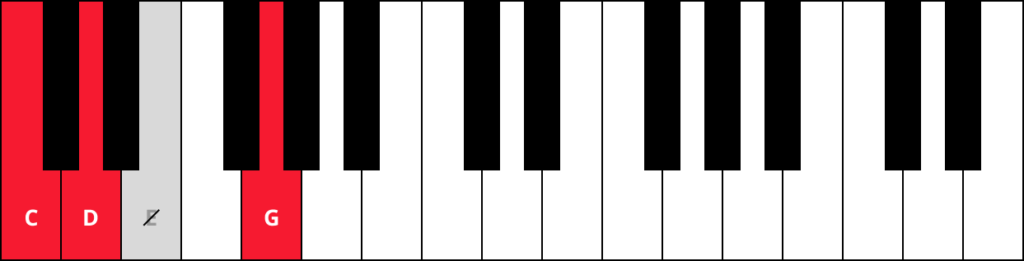
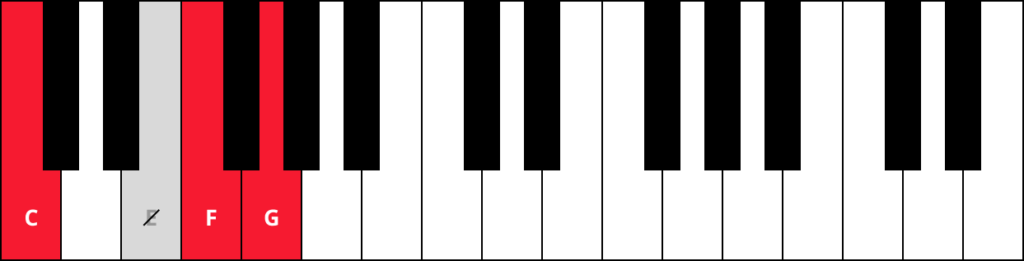
Sus chords aren’t fully major or minor, which gives them an open, unresolved sound.
Csus4 especially wants to resolve back down to the major chord (Csus4 → C is a classic move) – use it when you want tension that resolves. Csus2 sits more comfortably on its own, so it’s a good choice for fills or vamping on a chord a little longer.
One shorthand worth knowing: if you see Csus with no number attached, it means Csus4. The 4 is assumed unless a symbol tells you otherwise.
Add Chords
Now it’s time for Add Chords. Take a plain triad and add one extra color note – but without including the 7th. That last part is the detail that trips people up.
For example:
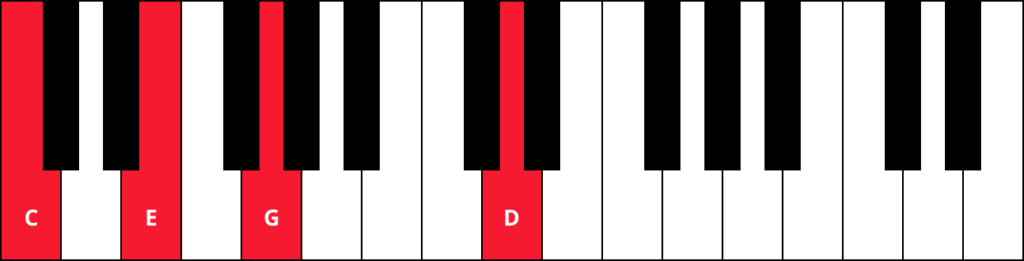
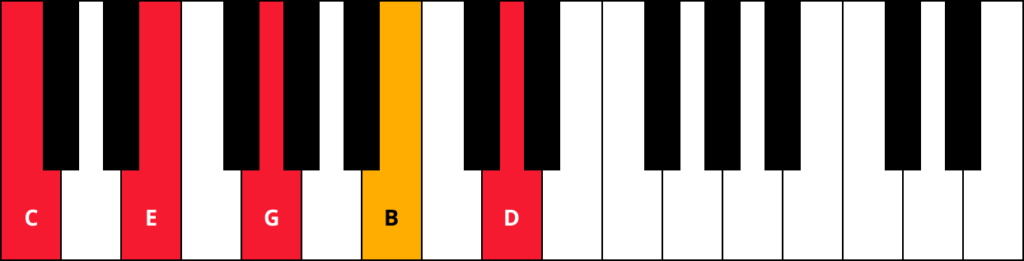
The difference between Cadd9 and Cmaj9 is the 7th. Cadd9 is just C-E-G-D – a triad plus the 9th, nothing else. Cmaj9 includes the full stack: C-E-G-B-D.
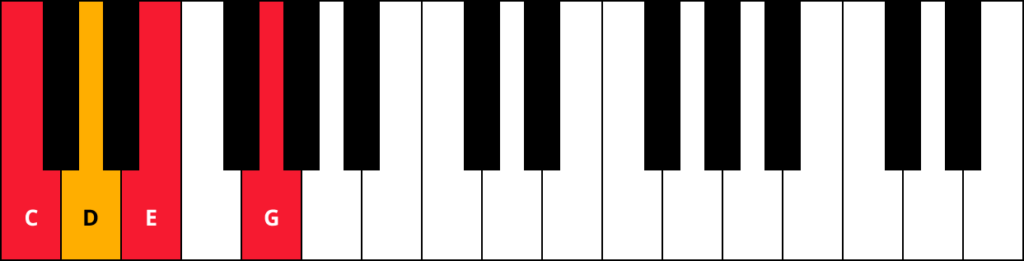
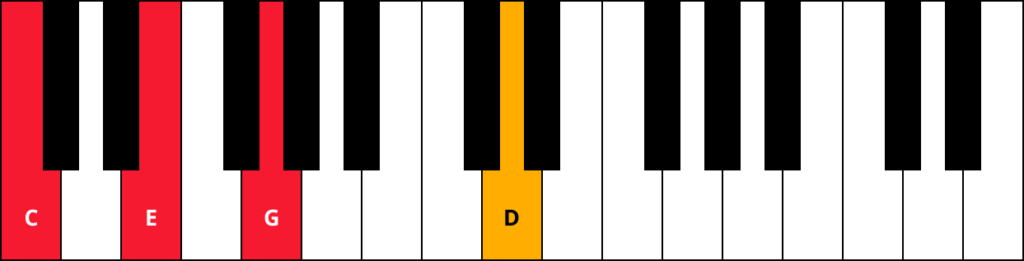
Here’s the beginner mistake most people make: Cadd2 and Cadd9 are not the same chord, even though 2 and 9 are the same note (D). Cadd2 stacks the D right next to the E, close together – C-D-E-G. Cadd9 puts that same D up an octave, above the G – C-E-G-D.
Cadd2 sounds tight and clustered; Cadd9 sounds open. Same note, very different color depending on where you put it.
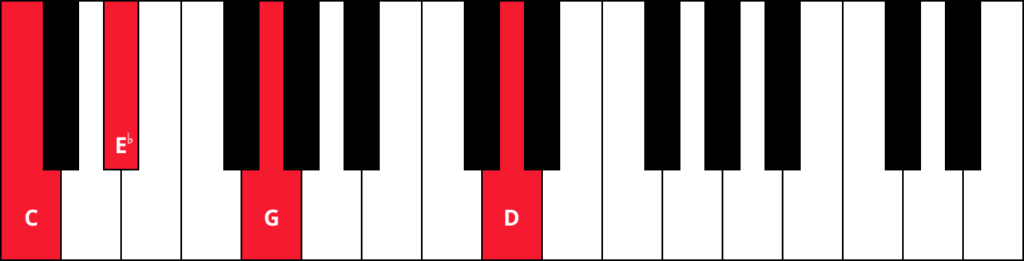
You can add pretty much any note to a chord and get an “add” chord — Cmadd9 (C-E♭-G-D) is a darker, more modern-sounding minor version of the same idea. When in doubt, add the note, listen, and trust your ear.
6th Chords
A 6th chord adds the 6th scale degree on top of a triad.
Formula: 1-3-5-6 (major) or 1-♭3-5-6 (minor).
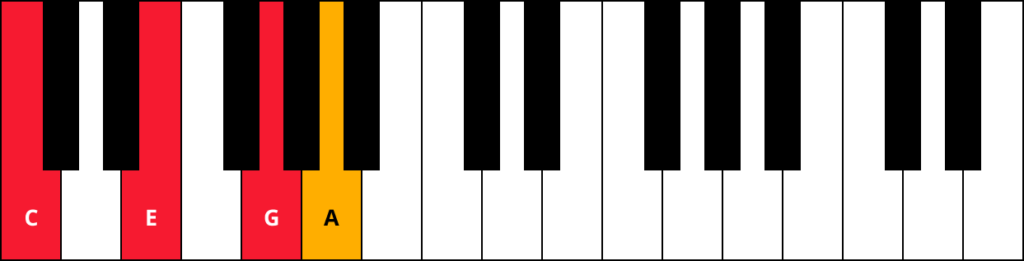
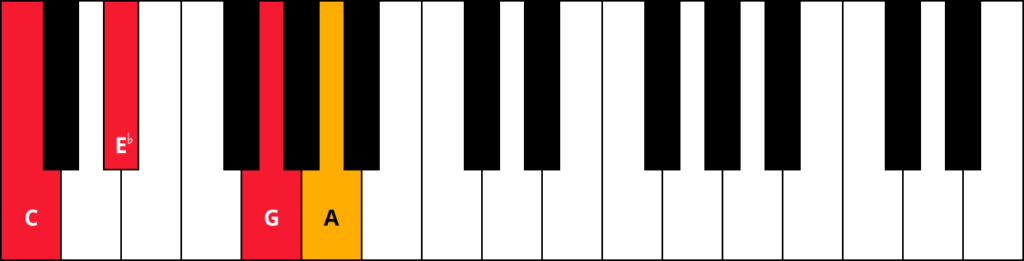
Notice both chords use A natural, even the minor one. That’s because “minor” in Cm6 only tells you to flatten the 3rd – it doesn’t touch the 6th. (If you wanted a flat 6, you’d write that as Cm(♭6) instead.)
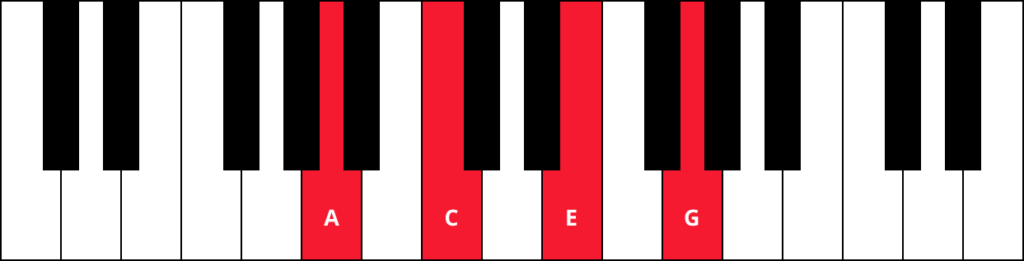
Here’s a fun bit of trivia: C6 and Am7 share the exact same four notes. Same notes, different bass note, completely different context – which is a good early reminder that context matters as much as the notes themselves.
7th Chords
Learning your 7th chords is one of the clearest steps from beginner to intermediate player. A 7th chord takes a triad and stacks one more note on top – and that note tells you a lot about how the chord functions.
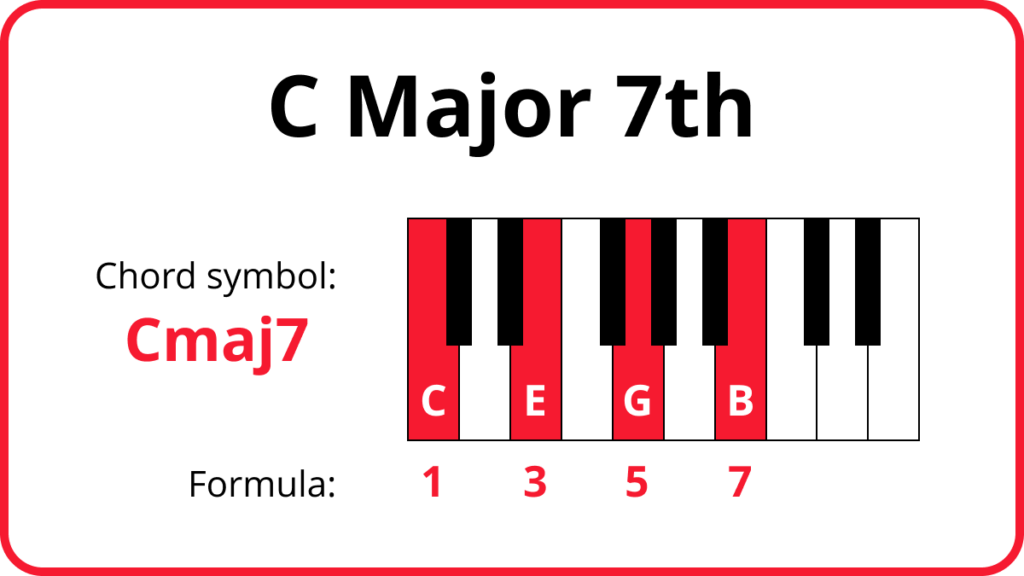
Major 7th (Cmaj7): C-E-G-B. Smooth and dreamy — don’t confuse this with a dominant 7th, they sound very different.
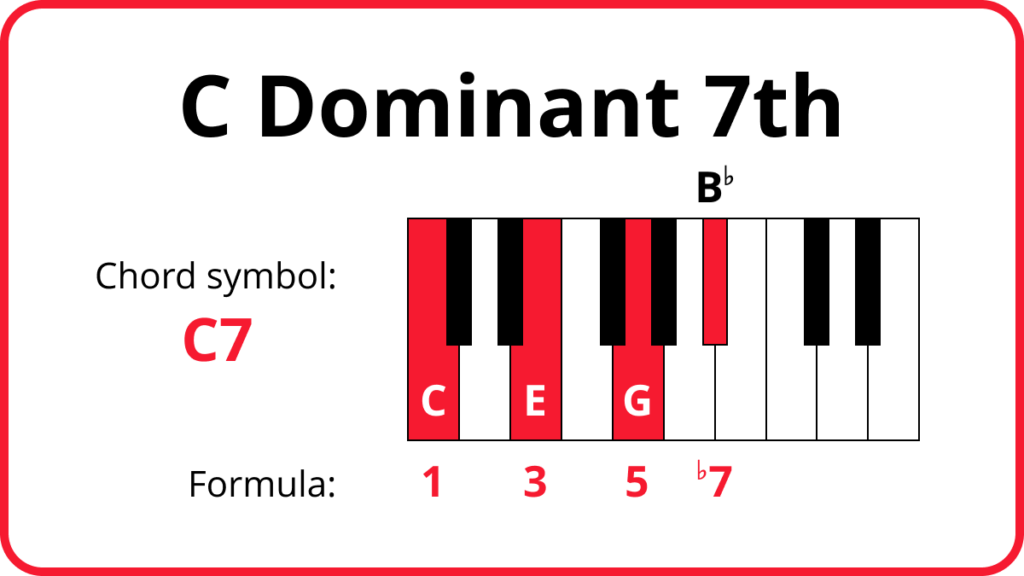
Dominant 7th (C7): C-E-G-B♭. More tension than a major 7 — this chord usually wants to resolve somewhere.
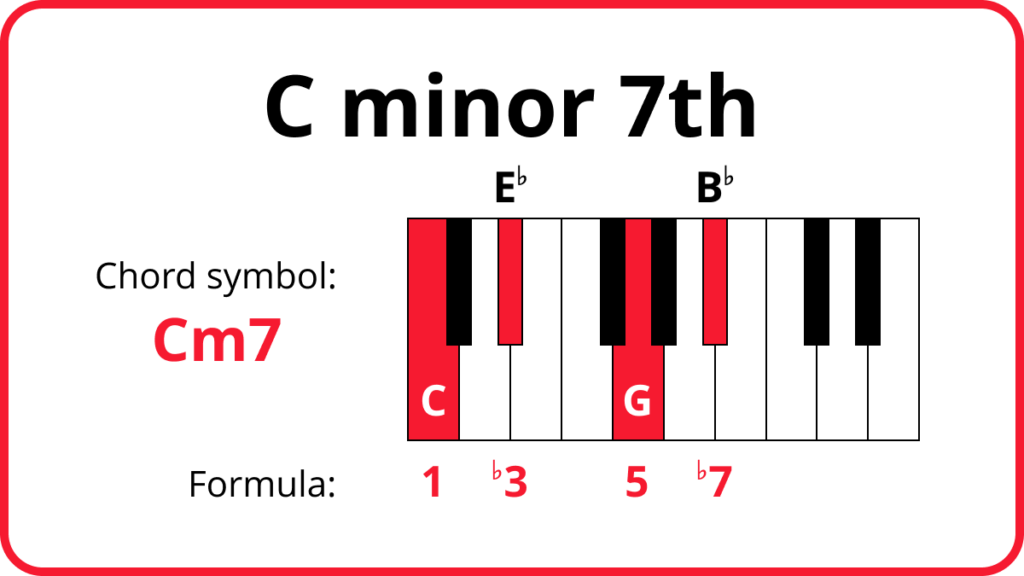
Minor 7th (Cm7): C-E♭-G-B♭. Soulful and moody.
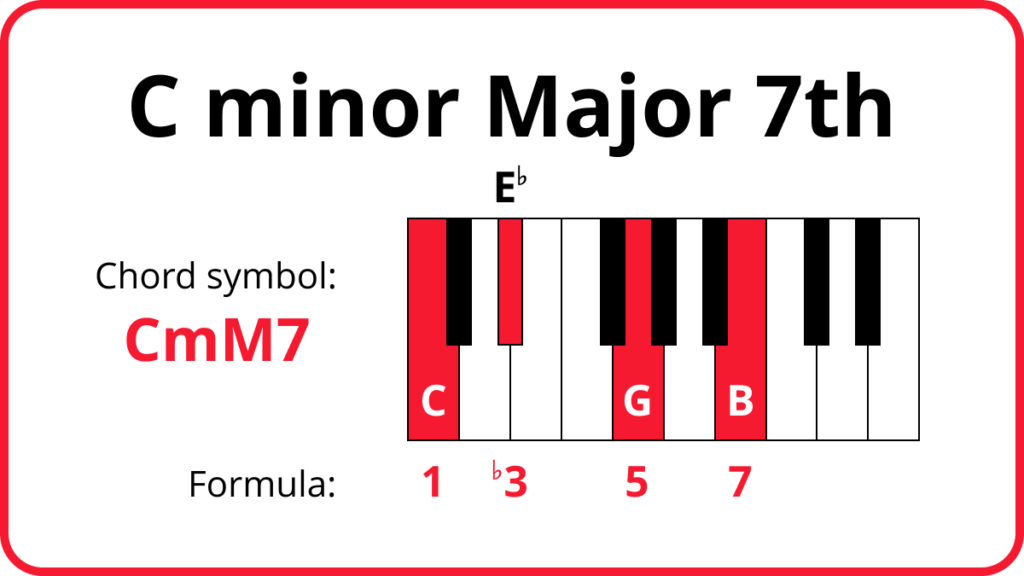
Minor Major 7th (Cm(maj7)): C-E♭-G-B. Darker and more mysterious than a regular minor 7 — the major 7th on top of a minor triad gives it an unresolved, almost suspenseful quality.
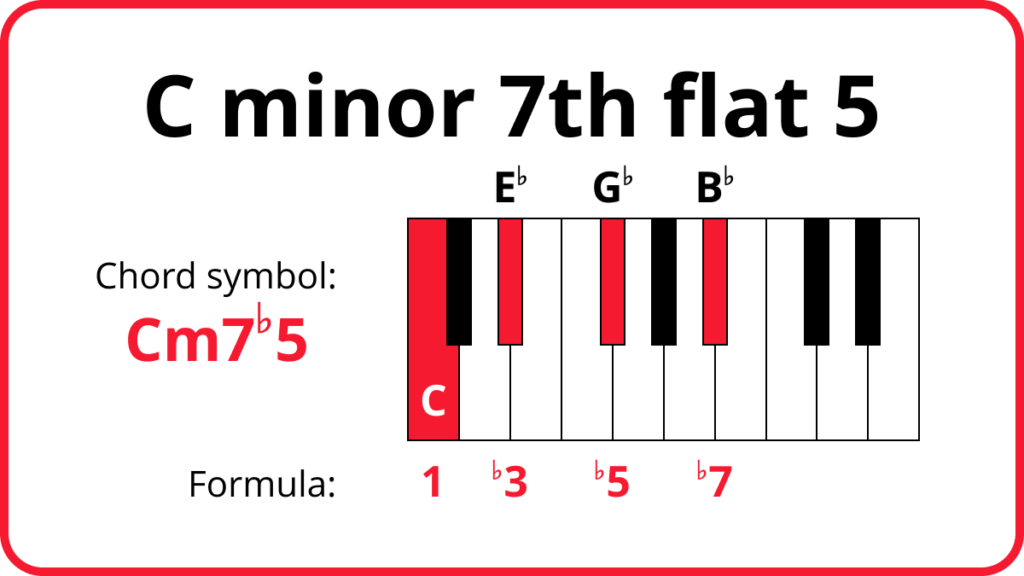
Half-Diminished 7th (Cm7♭5): C-E♭-G♭-B♭. Take a normal Cm7 and lower the 5th — that’s the whole formula. Also written with a circle-with-a-line-through-it symbol (ø).
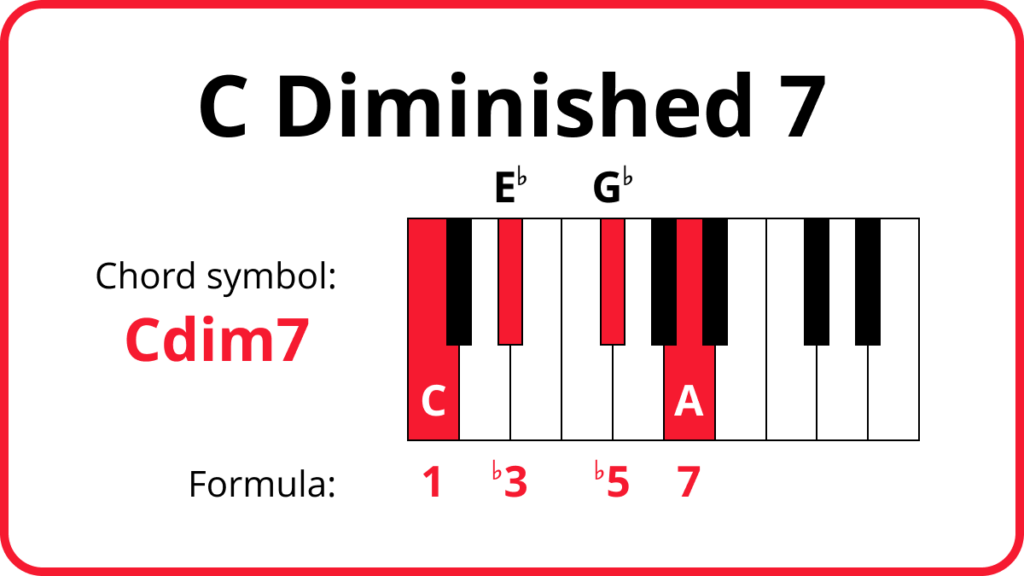
Fully Diminished 7th (Cdim7): C-E♭-G♭-A. That top note is technically a double-flat 7 (B𝄫), which is enharmonically A. A fully diminished chord is symmetrical – the shape repeats every minor 3rd – which is why it works so well as a passing chord between other chords.
With 7th chords, small details matter a lot. The difference between a B and a B♭ on top of a C triad completely changes what the chord does.
Diminished Chords
Diminished chords deserve their own closer look – they’re tense, symmetrical, and one of the most useful passing-chord tools you have.
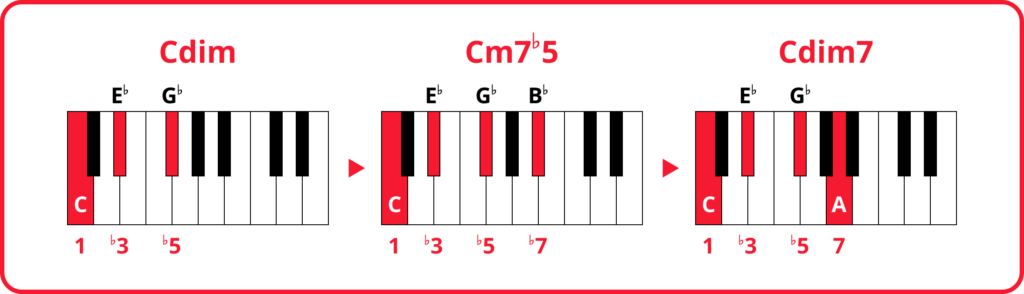
- Cdim (triad): C-E♭-G♭ — formula 1-♭3-♭5
- Cm7♭5 (half-diminished): C-E♭-G♭-B♭ — a diminished triad plus a flat 7
- Cdim7 (fully diminished): C-E♭-G♭-A — a diminished triad plus a double-flat 7
A fully diminished 7th chord is symmetrical: the shape repeats every minor 3rd, which is exactly why it works so well moving between chords.
For example, F → F#dim → G → G#dim → Am. Diminished chords sound tense in isolation, but used as passing chords, they help your progressions move.
Augmented Chords
Where diminished chords shrink a triad, augmented chords stretch it – raising the 5th to create a floating, unresolved sound.
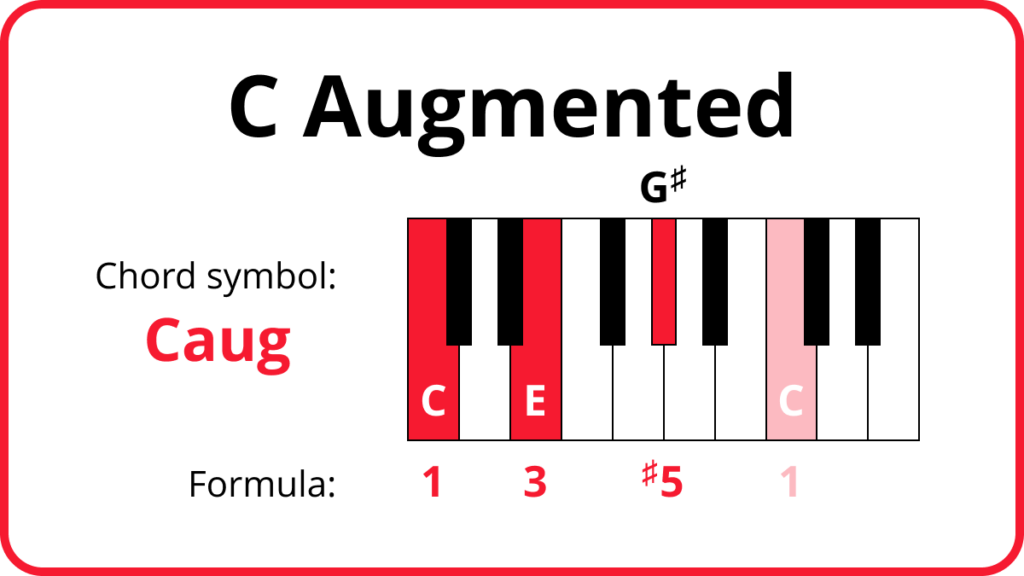
Caug: C-E-G#. It feels like it wants to go somewhere – try playing C, then Caug, then F, and you’ll hear that raised 5th pulling you toward the next chord.
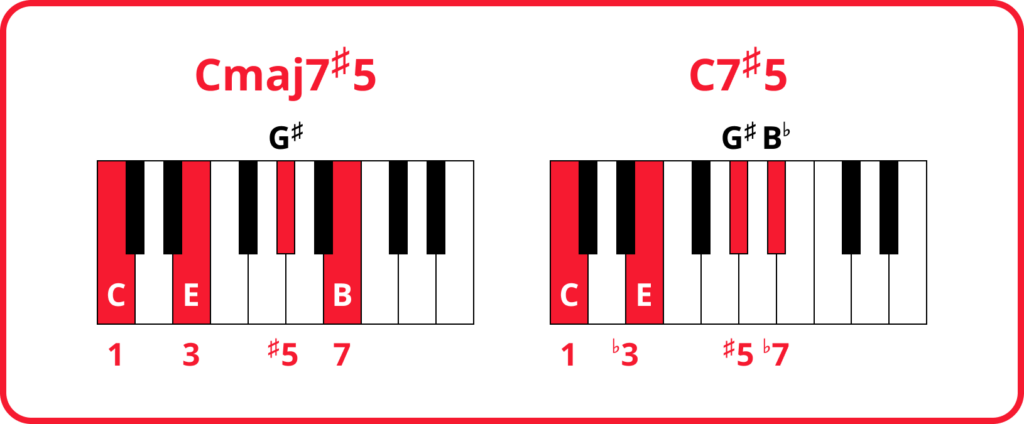
- Cmaj7#5: C-E-G#-B — a more modern, cinematic jazz color
- C7#5: C-E-G#-B♭ — a dominant tension chord that wants to resolve
Same raised 5th, two very different colors depending on whether the 7th is major or dominant.
9th Chords
Now we’re into extensions – notes that go beyond the octave. The 9th is the same as the 2nd, just up an octave. Important distinction: a true 9th chord includes the 7th. If there’s no 7th, it’s an add chord (see above), not a 9.

- Cadd9: C-E-G-D (no 7th)
- C9: C-E-G-B♭-D (dominant 7th + 9th)
- Cm9: C-E♭-G-B♭-D (minor 7th + 9th)
- Cmaj9: C-E-G-B-D (major 7th + 9th)
That B♭ is the whole difference between Cadd9 and C9 – and it changes everything about how the chord functions.
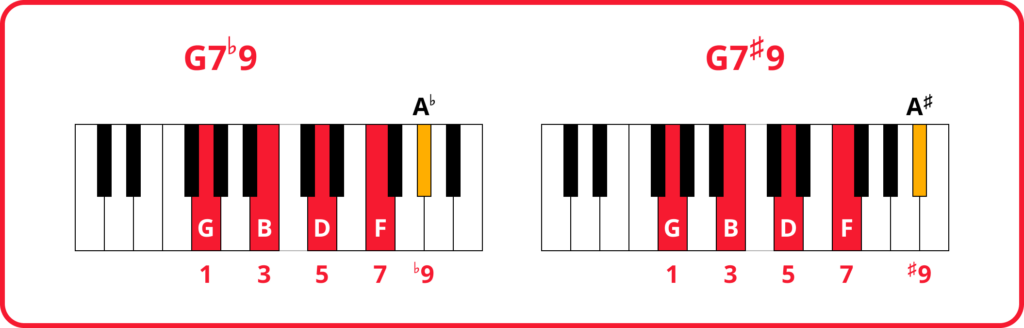
On dominant chords, you can also alter the 9th for extra tension before a resolution: C7♭9 (C-E-G-B♭-D♭) and C7#9 (C-E-G-B♭-D#) both pull harder toward resolution than a plain 9th does.
11th Chords
The 11th is the same note as the 4th, just up an octave. Context matters a lot here, because a natural 11 can clash with a major 3rd.
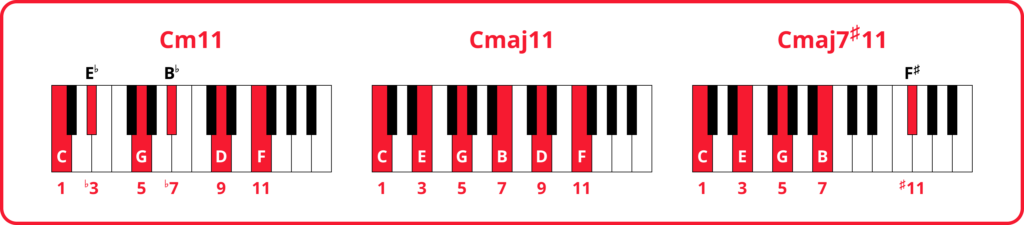
- Cm11: C-E♭-G-B♭-D-F — the natural 11 (F) sounds great against a minor 3rd
- Cmaj11: C-E-G-B-D-F — that same F sits right next to the major 3rd (E), which sounds crunchy and tense
- Cmaj7#11: C-E-G-B-D-F# — raising the 11 fixes the clash and gives you a floating, Lydian sound instead
Minor 11s are smooth right out of the box. Major chords almost always use a #11 instead of the natural 11 for exactly this reason.
13th Chords
The 13th is the same as the 6th, used as an extension. 13th chords show up constantly in jazz, funk, soul, blues, gospel, and R&B.
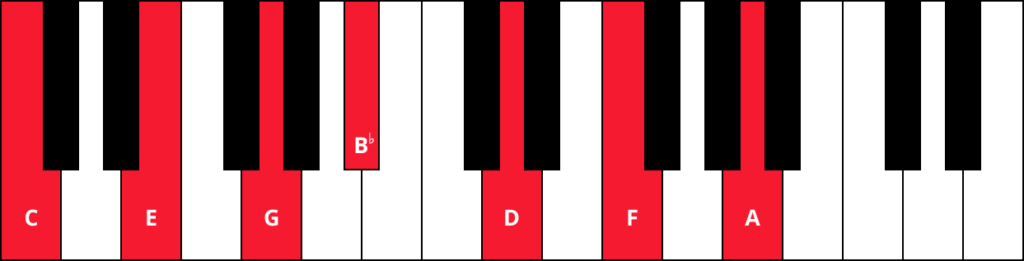
Stack every note of a C13 and you get C-E-G-B♭-D-F-A – seven notes, which is far more than two hands really need to play at once.
In practice, pianists leave notes out.
The 3rd and 7th are the notes that really define the chord; the 5th is often optional, and the root can usually be skipped if there’s a bass player covering it. The 11th (F) is usually left out too, for the same reason it’s tricky in 11th chords – it clashes with the 3rd (E) sitting right next to it. If you do want that 11 in the voicing, sharpen it to F# instead, same fix as before.
A practical C13 might just be E-A-B♭-D.
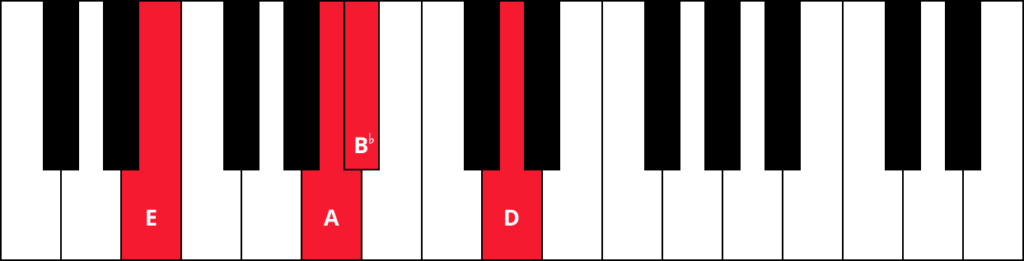
13th chords sound advanced on paper, but you don’t need giant hands to play them — you just need to know which notes actually matter.
Altered Dominant Chords
Altered dominants are dominant 7th chords with the 5th and/or 9th raised or lowered – and they’re where chord symbols start to look intimidating. The idea underneath is simple: alterations add tension before a resolution.
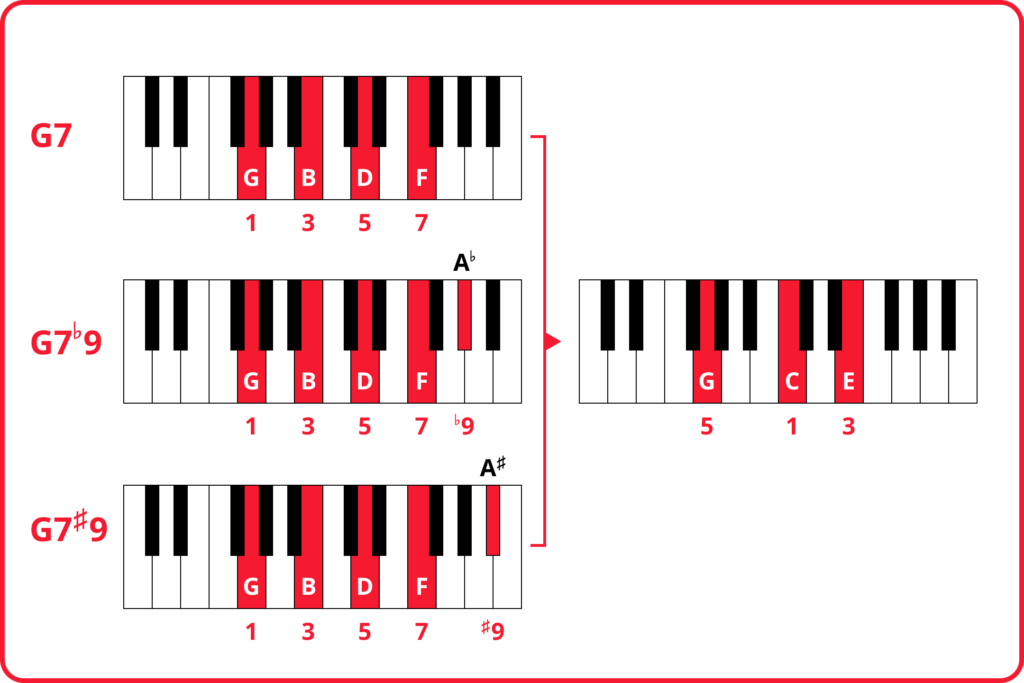
Play G7 → C, and it resolves cleanly. Play G7♭9 → C, and there’s more tension before the landing. Play G7#9 → C, and it’s even spicier. Same resolution, three different amounts of pull getting there.
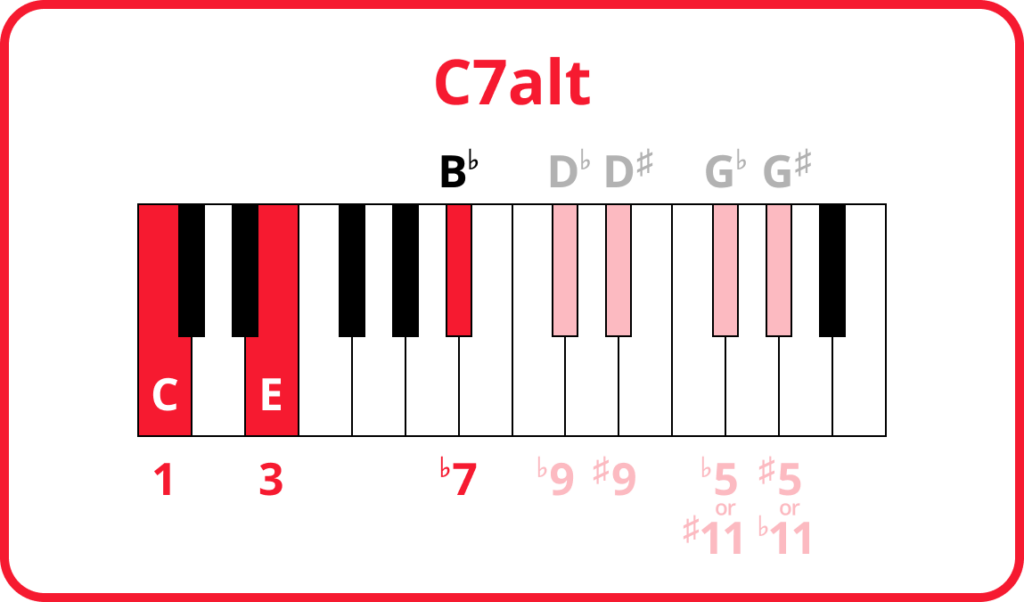
C7alt is shorthand for a dominant 7 shell (C-E-B♭) with a mix of altered tensions layered on top – some combination of ♭9, #9, ♭5, or #5, depending on the voicing.
One note worth knowing: ♭5 and #11 are often the same note enharmonically, and so are #5 and ♭13. The chord symbol tells you how the composer is thinking about the note, even when it’s the same key on the piano.
Slash Chords
A slash chord tells you two things at once: the chord to play, and the bass note underneath it. C/E means “play a C chord with E in the bass.”
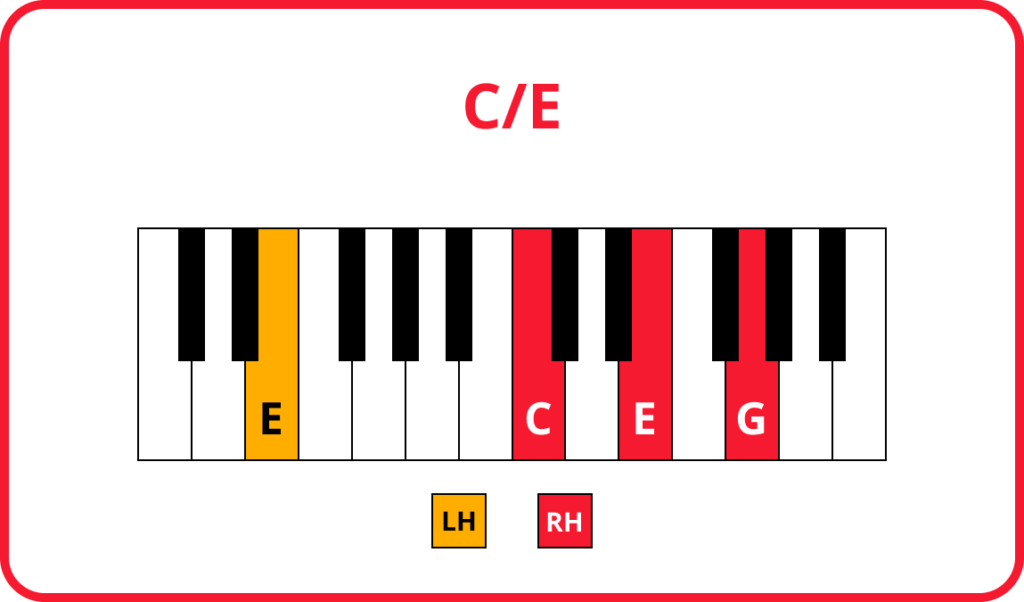
C/E is really just a C major triad in first inversion, notated as a slash chord. This type is great for smooth, stepwise bass lines under a static chord.
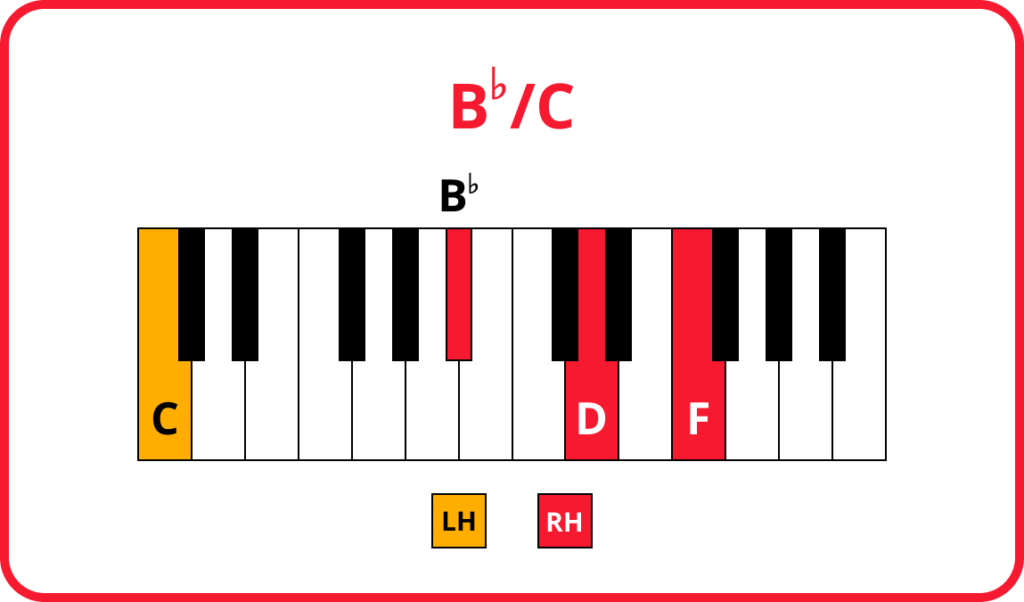
Bb/C is a different kind of slash chord – not an inversion, but a color choice. Depending on the voicing, Bb over C can sound like a C7sus or C9sus. Slash chords like this are a shorthand way of describing a more complex sound with a simple symbol.
Polychords
A polychord is one chord stacked on top of another – a shorthand for a more complex color, usually reserved for more advanced arranging.
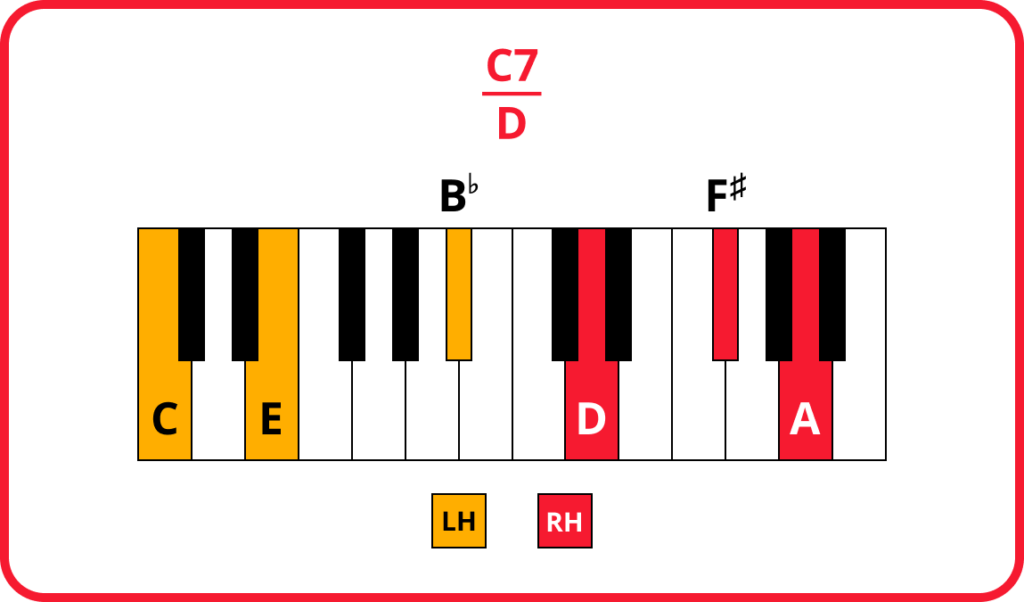
Play D-F#-A in the right hand over C-B♭-E in the left, and you get a color that functions like a C13#11 – a dense, jazzy dominant sound built from two simple triads instead of one complicated symbol.
The lower chord needs to clearly establish the root; without that context, a polychord can be mistaken for a regular extended chord.
Quartal Chords
Almost everything in this guide so far is built by stacking 3rds. Quartal chords flip that and stack in 4ths instead.
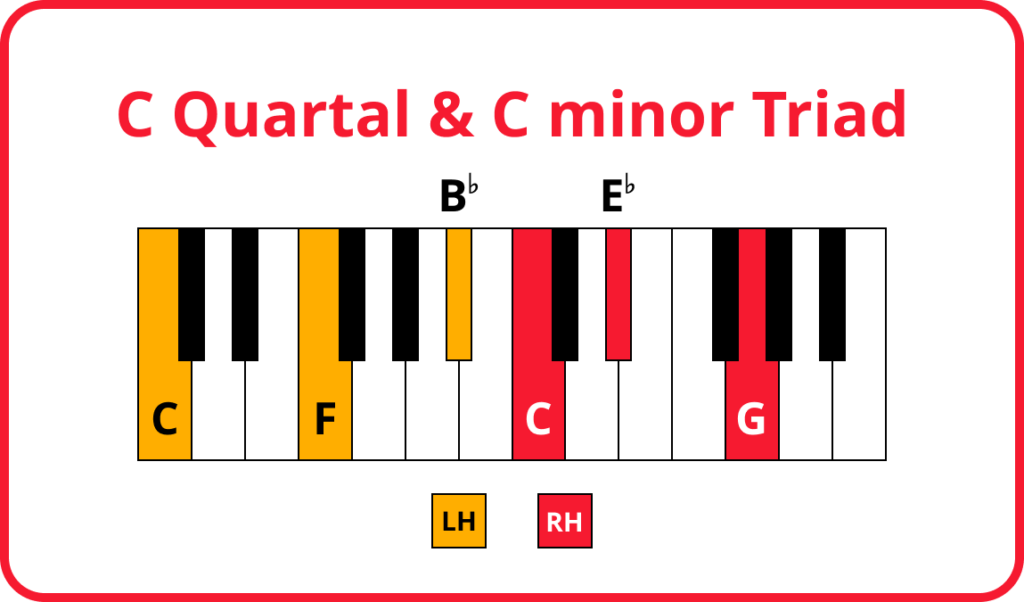
C-F-B♭ sounds noticeably more open and modern than the standard C-Eb-G triad, and it’s less clearly major or minor.
Quartal harmony shows up a lot in modal jazz, film scoring, and modern gospel – and it’s typically used as a voicing choice rather than something you’d see written out as its own chord symbol.
Cluster Chords
Cluster chords use tightly neighboring notes to create texture rather than a clean, functional harmony.
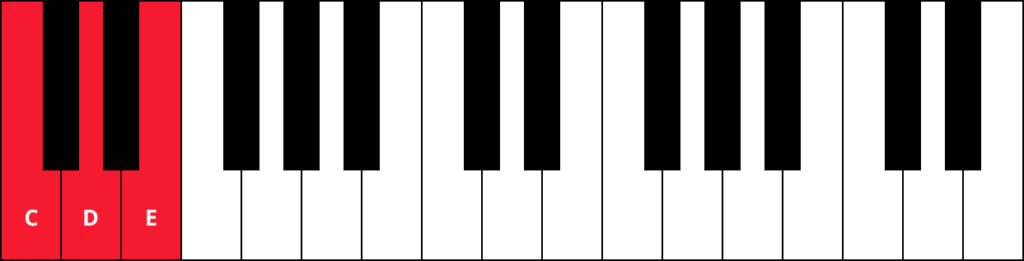
C-D-E, played together, is tense, emotional, and a little cinematic. Clusters are less about “what’s the exact chord symbol” and more about “what texture am I creating” – they come from adding 2nds or other close color tones on top of a more familiar shape.
How to Decode Any Chord Symbol
Once you can break any chord symbol down into these steps, you stop memorizing and start understanding. The method is simple:
- Find the root.
- Identify the quality (major, minor, diminished, augmented, dominant).
- Add the 7th, if the symbol calls for one.
- Add any extensions (9, 11, 13).
- Add any alterations (♭ or # on an extension).
- Check for a slash – that’s your bass note.
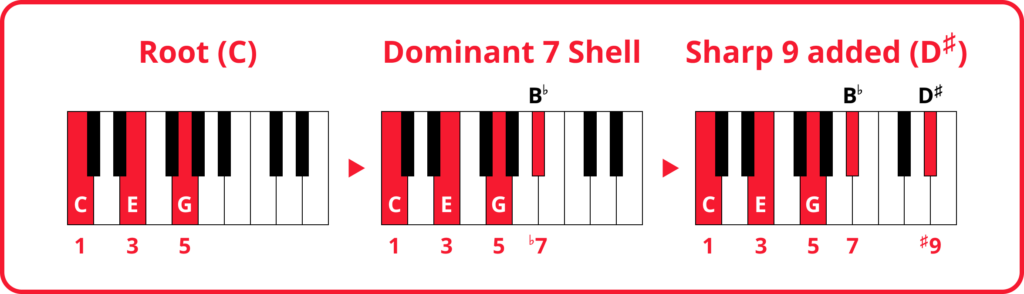
Take C7#9 as an example. Root: C. Quality: dominant 7, which gives us C-E-G-B♭. Then add the #9: D#. Final chord: C-E-G-B♭-D#. And just like with the 13th chord earlier, you don’t have to play every one of those notes — pick the ones that define the sound and leave the rest.
That’s the whole system. Every chord symbol in this guide, and pretty much any chord symbol you’ll ever run into, comes down to running through that same six-step checklist.
Keep Building
Pick one root note – C is a good place to start – and practice building each chord family in this guide from that same root. The goal isn’t just to recognize the chord symbol. It’s to hear what the chord does.
Want to Go Even Deeper?
If this clicked for you, you’re going to love exploring chords, formulas, and lead sheets even further inside Musora, which you can try with our free 7-day trial.
You’ll also get unlimited access to our step-by-step learning paths, 62 deep-dive courses, note-for-note breakdowns of over 1,000 songs in our lead sheet view, and so much more.