

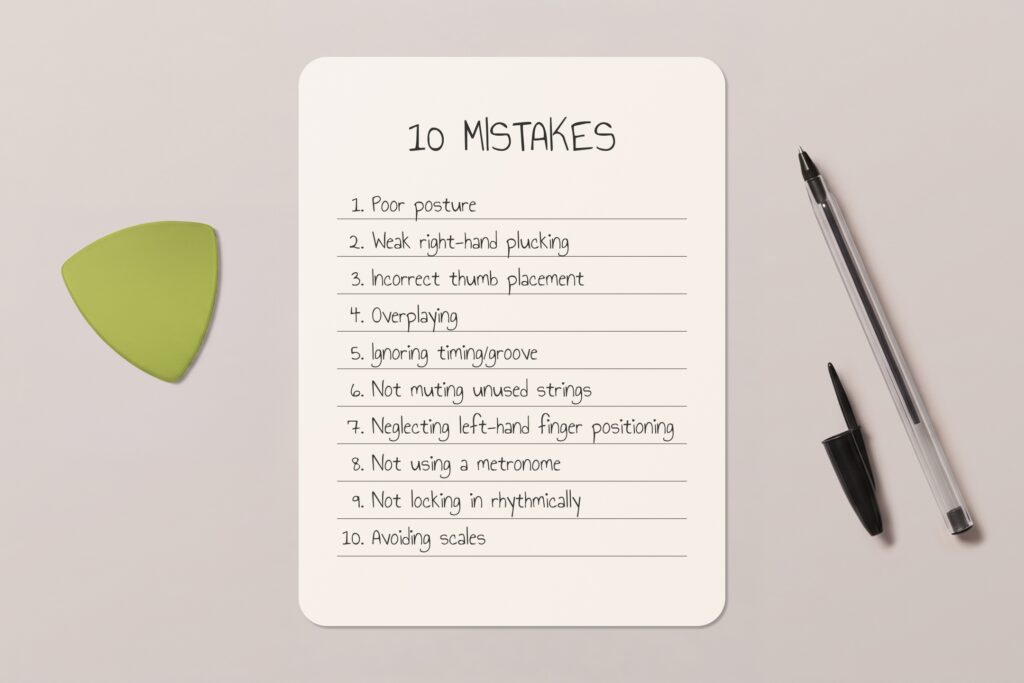
Bass doesn’t get talked about the way guitar or drums do, but that also means a lot of beginner bassists are left to figure things out on their own – and end up building habits nobody ever corrected. We see the same ten mistakes come up again and again, and the good news is, every one of them is fixable once you know to look for it.
Let’s go through them.
Poor Posture, Standing or Seated
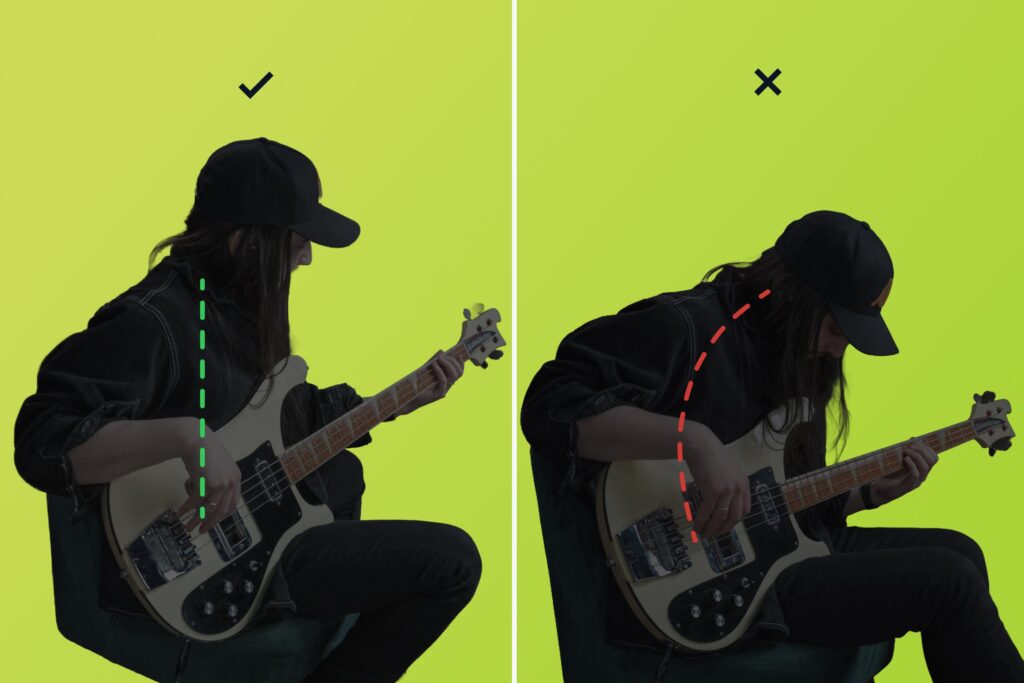
Your posture affects your reach, your right-hand consistency, basically everything.
Strap too low, and you’re stretching for every note. Sit hunched over, and your plucking hand loses its natural angle. Get your setup right first – it’s the foundation every other fix on this list depends on.
Weak or Inconsistent Right-Hand Plucking
Many beginners focus all their attention on the left hand and treat the right hand as an afterthought. That’s backward – your plucking hand controls tone, dynamics, and consistency across every note you play. If your attack isn’t even, nothing else matters as much as it should.
Incorrect Thumb Placement or Anchoring
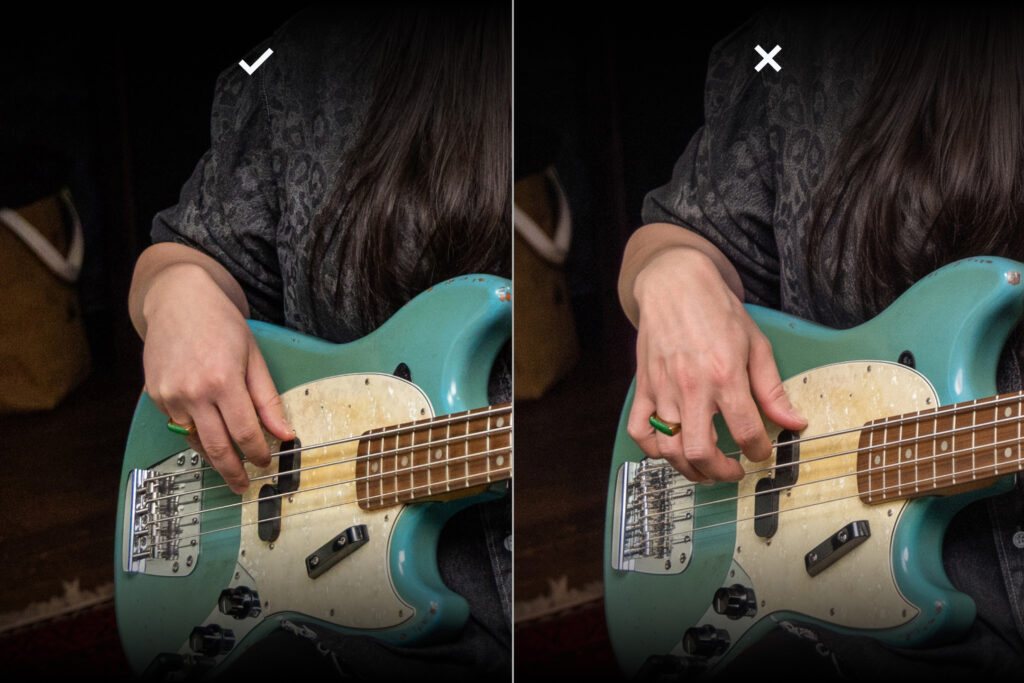
Where your thumb rests matters more than most beginners realize.
Anchor it in the wrong spot and you lose stability, which throws off everything your fingers are trying to do above it. Get your thumb placement dialed in, and your plucking hand suddenly has something solid to work from.
Overplaying Instead of Locking Into the Groove
This is probably the most common mistake we see from bassists who come from another instrument.
Bass isn’t about playing as many notes as you can – it’s about playing exactly the right ones. The groove is the job. Fewer notes, placed with intention, will always sound better than a busy line that’s fighting the pocket.
Chasing Flashy Playing Over Timing
Flashy lines are fun to learn, but timing is what actually makes a bassist valuable in a band.
A simple line played with rock-solid timing will outperform a complicated one that drags or rushes, every time. Get your timing locked in first – the flashy stuff means a lot more once you can actually hold a groove.
Not Muting Unused Strings
String noise is one of those things that sounds “fine” until you record yourself and hear how much unwanted noise is actually in there. If you’re not muting the strings you’re not playing, you’re letting them ring and buzz in the background of everything you do play. Muting technique is unglamorous, but it’s the difference between clean and messy.
Neglecting Left-Hand Finger Positioning and Reach
Bad left-hand positioning shows up as unnecessary stretching, muted notes you didn’t intend, and fatigue that builds up fast.
Small adjustments here, like finger curve, hand angle, and thumb position on the back of the neck, make a bigger difference than most beginners expect.
Skipping the Metronome or Drum Track
We get why this feels optional when you’re just trying to learn a line. But bass lives and dies by timing, and a metronome or drum track is the only honest feedback you’ll get on whether your timing’s actually solid. Skip it, and you’re guessing.
Not Learning to Listen to the Drummer
This is bass-specific in a way that many beginners don’t expect.
Your job isn’t just to play your part – it’s to lock in with the kick drum and build a rhythmic foundation together. Bassists who never train this skill end up playing “at” the drummer instead of with them, and it shows.
Avoiding Scales and Fretboard Knowledge
Scales aren’t just theory homework – they’re literally how you find your way around the neck without thinking about it. Avoid them early on, and you’re stuck relearning the fretboard from scratch every time a new song throws something unfamiliar at you. A little scale work up front saves you a lot of guesswork later.
Don’t try to fix all ten at once. Pick whichever one sounds most familiar, work on it deliberately for a week or two, and move to the next. That’s how real bass technique gets built – one honest fix at a time.
Want to Go Even Deeper?
If you recognized yourself in a few of these, you’re not alone – and it’s exactly why structured lessons make such a difference.
Inside PlayBass on Musora, our step-by-step Method is built to catch habits like these early, with real instructors guiding your technique from lesson one. Click here to try it free for 7 days and see for yourself.
You’ll get access to structured, step-by-step lessons and direct feedback from world-class instructors — so instead of guessing whether you’re fixing the right things, you’ll know exactly what to work on and why.