

I’ve worked with a lot of singers just starting out, and one thing I’ve noticed is that most beginner mistakes aren’t about skill or talent – they’re about habits nobody ever pointed out. A lot of singers spend months fighting their own technique without realizing that’s what’s happening. The moment you catch these, singing gets so much easier, and honestly, so much more fun.
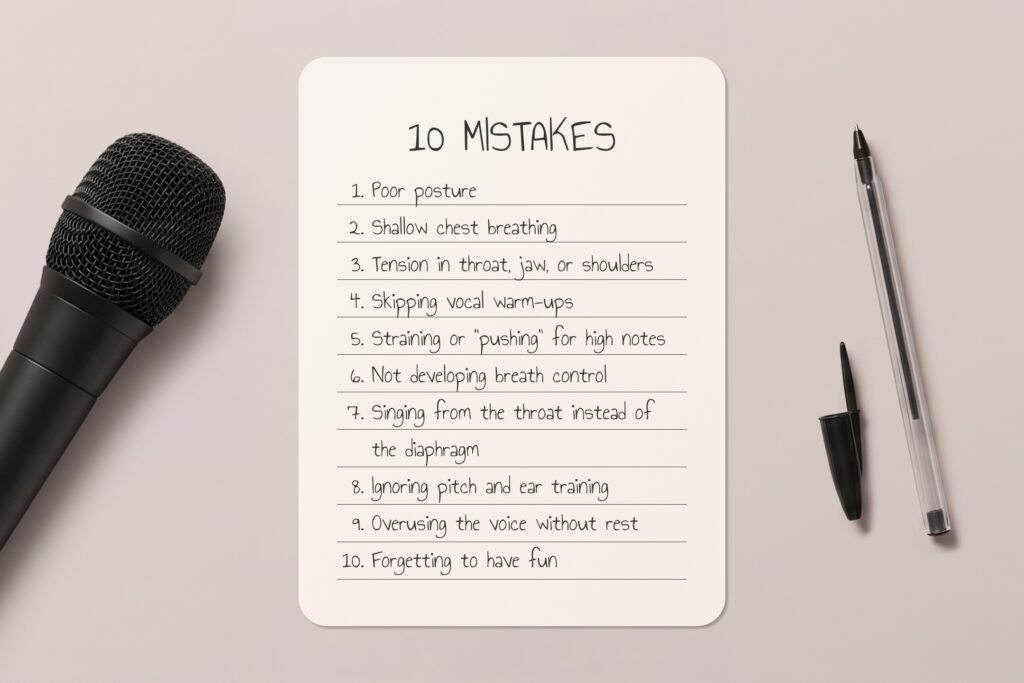
Here are the ten I see most often, and what to do instead.
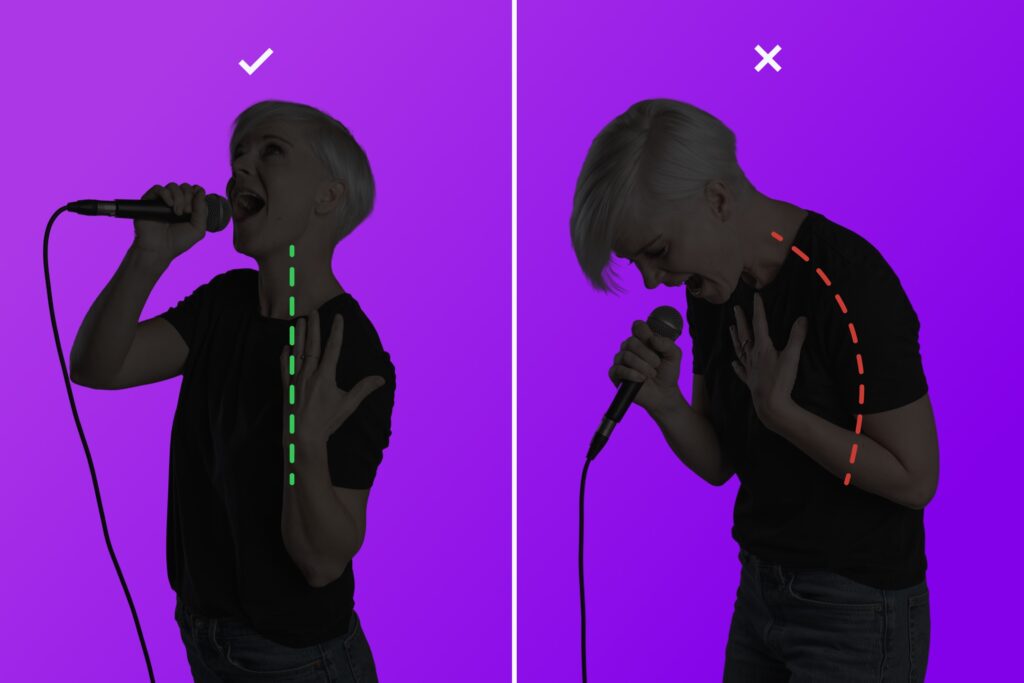
Poor Posture
Slouching restricts your breath and closes off your resonance before you’ve even opened your mouth. Your body is your instrument – if it’s collapsed, everything downstream of that gets harder. Stand or sit tall, shoulders relaxed, and give your lungs and your voice the room they need to actually work.
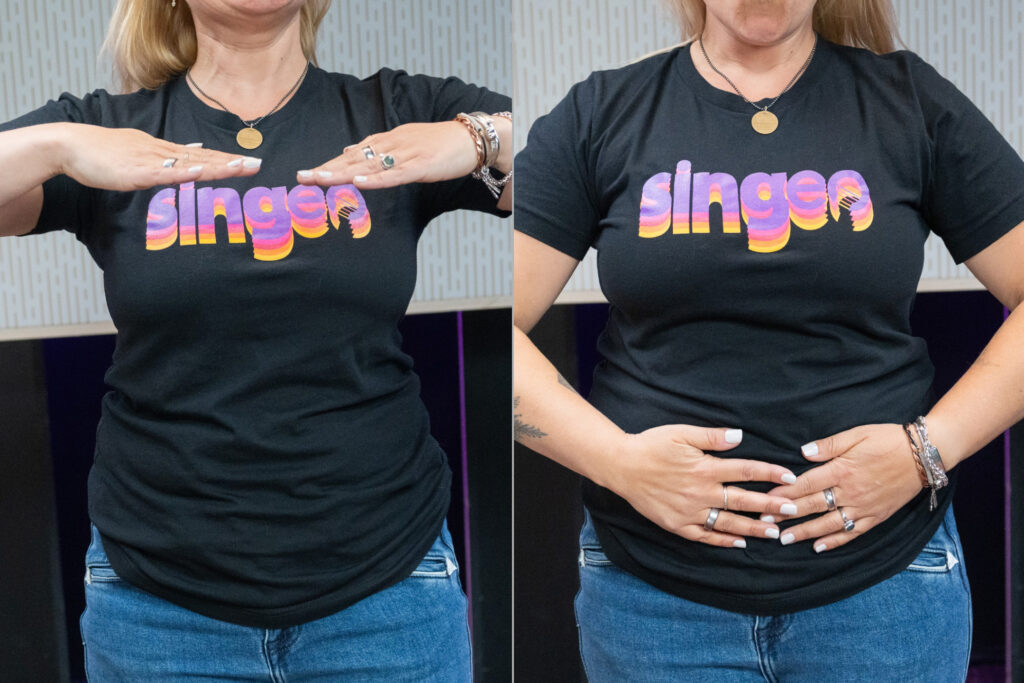
Shallow Chest Breathing
This is one of the first things I check with a new student.
Chest breathing feels natural, but it gives you a shallow, unsupported sound and leaves you gasping for air mid-phrase. Real breath support comes from lower down – think about your belly expanding on the inhale, not your chest rising.
Tension in the Throat, Jaw, or Shoulders
Tension is sneaky – it builds up exactly when you’re trying hardest to sound good, which is a frustrating paradox. A tight jaw or raised shoulders will choke your tone and make everything feel like more effort than it should. Relaxed doesn’t mean lazy – it’s actually what lets your voice do its job.
Skipping Vocal Warm-Ups
I get it – warm-ups can feel like an extra step when you just want to sing the song you love. But your voice is a muscle, and jumping in cold is how strain happens. Even five minutes of gentle warming up changes how your voice responds for the rest of your session.
Straining or "Pushing" for High Notes
This is probably the mistake I see that causes the most frustration.
Pushing harder for a high note almost always makes it worse, not better – it tightens exactly the muscles that need to stay free. High notes come from technique and support, not force. The moment you stop pushing is usually the moment the note actually opens up.
Not Developing Breath Control for Sustained Phrases
Ever run out of air halfway through a phrase you know you should be able to finish? That’s a breath support issue, not a lung capacity one. Building real breath control means learning to release air slowly and evenly – it’s a skill you train, not something you’re just born with or without.
Singing From the Throat Instead of the Diaphragm
This connects directly to the tension and breathing points above.
When your diaphragm isn’t doing the work, your throat tries to compensate – and throats were never built to carry that load. Learning to engage your diaphragm takes pressure off your throat and gives you a fuller, more sustainable tone.
Ignoring Pitch Practice and Ear Training
A lot of beginners assume pitch is something you either have or don’t. It’s really not – your ear is trainable, just like any other skill.
A little consistent ear training goes a long way toward singing in tune more reliably, even on songs you haven’t worked on specifically.
Overusing the Voice Without Rest
Your voice needs recovery time just like any other muscle.
Singing for hours without a break, or pushing through when you’re already feeling strain, is how real vocal damage happens. Rest isn’t a sign you’re not working hard enough – it’s part of the work.
Forgetting to Have Fun
Do the work of practice, but always leave room to just sing.
I still remember why I fell in love with singing in the first place, and it wasn’t from drilling scales or breathing exercises. It was from the days I let myself belt out a song purely because I loved it, or play around with a melody just to see where my voice could take it. None of the techniques in this article matters if you lose that.
Remember, singing and making music should be fun! That’s really what it’s all about.
You don’t need to fix all ten at once – pick whichever one feels most familiar to you right now, work on it deliberately for a week or two, and move to the next. That’s how real technique gets built: one honest adjustment at a time.
Want to Go Even Deeper?
If you recognized yourself in a few of these, you’re not alone – and it’s exactly why structured lessons make such a difference. Inside Singeo on Musora, our step-by-step Method is built to catch habits like these early, with real instructors guiding your technique from lesson one. Click here to try it free for 7 days and see for yourself.
You’ll get access to structured, step-by-step lessons and direct feedback from world-class instructors – so instead of guessing whether you’re fixing the right things, you’ll know exactly what to work on and why.